Chain link has an image problem. People picture a school playground or an industrial yard, and they assume it is what you install when you cannot afford anything else. Then they price a 300-foot backyard perimeter in cedar, look at the number, and start asking better questions.
The truth is that a chain link fence in Wichita, KS is the right answer more often than people expect — for a dog owner who needs containment and not privacy, for a rental property that has to be durable and cheap to maintain, for a big back lot where a solid fence would just become a sail in the next Kansas windstorm. It is also sometimes the wrong answer, and this guide is honest about when.
What follows is what we would tell you standing in your yard: what chain link actually costs here, which specs matter and which are sales noise, how to make it hold a dog, how to make it look better than galvanized silver, and how it has to be built to survive Sedgwick County clay and wind.

Why Wichita Homeowners Still Choose Chain Link
Chain link keeps earning its place in this market for four practical reasons, and only one of them is price:
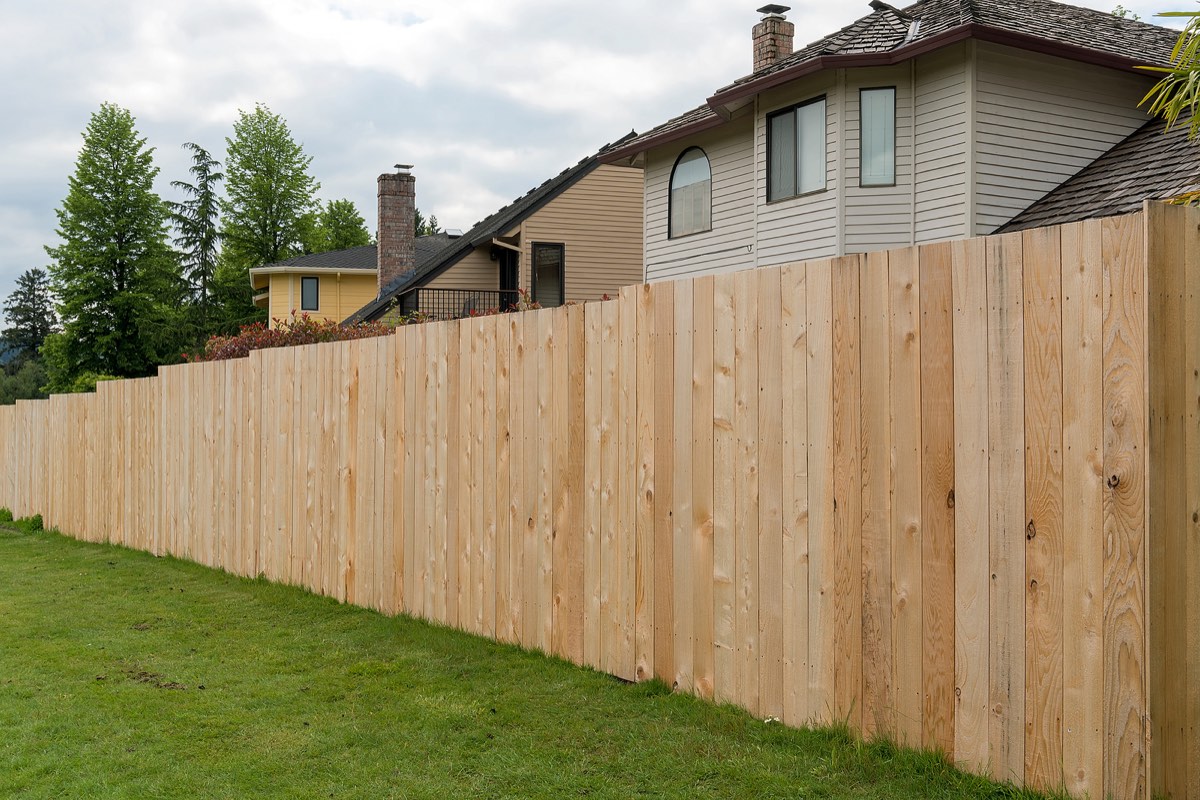
- It is the cheapest real fence per foot. Not the cheapest-looking — the cheapest that still does a fence job. On a long perimeter, the gap between chain link and a 6-foot cedar privacy fence is often the difference between fencing the whole yard this year and fencing half of it.
- Wind goes straight through it. This matters more in Wichita than almost anywhere. A solid privacy panel catches every gust like a sail; open mesh does not. Chain link is one of the few fence types we almost never get storm calls about, and our wind-resistant fence guide explains why solid fences fail here and open ones do not.
- It contains dogs and kids without blocking the yard. You keep sightlines, airflow, and light. On a small lot, a 6-foot solid fence can make a backyard feel like a box — chain link never does.
- It is close to maintenance-free. No staining, no sealing, no warping boards. Galvanized steel and Kansas weather get along fine. Compare that to the every-few-years staining schedule a wood fence needs.
Where it falls short is equally simple: chain link gives you zero privacy and only modest security. If screening the neighbors is the whole point of the project, skip to the Wichita privacy fence guide instead — we would rather tell you that now than after you have paid for the wrong fence.
What a Chain Link Fence Costs in Wichita (2026)
Chain link is priced per linear foot, and the honest answer is that the range is wide because the specs underneath the price vary enormously. As planning numbers for the Wichita market in 2026:
- 4-foot galvanized residential: roughly $10–$18 per linear foot installed — the classic backyard and side-yard fence.
- 5 to 6-foot galvanized residential: roughly $15–$25 per linear foot installed.
- Black or green vinyl-coated: typically adds a few dollars per foot over bare galvanized at the same height, often landing in the $20–$35 range on a 6-foot residential fence.
- Heavier commercial-grade builds — 6-gauge fabric, Schedule 40 framework, 8 feet and up — run higher again, which our commercial fencing page covers.
- Gates are priced separately. A walk gate is a modest add; a 12 to 16-foot double drive gate is a real line item.
What moves your number up or down: total footage (longer runs get cheaper per foot as the mobilization cost spreads), the number of corners and terminal posts (corners are the expensive posts, so a jagged lot costs more than a rectangle), gate count and width, slope and terrain, whether a fence has to come out first, and the gauge and framework grade you specify.
Bottom line: the per-foot ranges above are for planning, not quoting. Two 200-foot chain link fences on the same street can differ by thousands depending on corners, gates, and grade. Our estimates are free, written, and itemized — and they include free removal and haul-away of your old fence. For how chain link stacks up against every other material we install, see our 2026 fence cost guide.
Chain Link Heights and What Each One Is Actually For
Height is the first decision, and it is driven by what you are containing, not by looks:
- 3 feet — decorative and boundary-marking. Contains a small, calm dog and defines a garden or front area. Will not stop much else.
- 4 feet — the most common residential height in Wichita. Fine for most dogs, kids, and yard definition, and it stays under front-yard height limits in most residential zoning.
- 5 feet — the honest middle ground, and the one most people skip past. If you have a dog that can clear four feet but you do not want the cost or the look of six, five is the answer.
- 6 feet — serious containment. Athletic dogs, pool-area perimeters, and back lots where you want a genuine barrier. This is the tallest most residential zoning allows in a rear yard without extra approval.
- 8 feet and up — commercial and industrial territory: warehouses, storage yards, ball fields, utility sites. Different framework, different fabric, usually a permit conversation.
If a pool is anywhere in the picture, height is only part of the requirement — barrier spacing and self-closing, self-latching gates carry just as much weight. Our Wichita pool fence guide covers that in full.

Wire Gauge: The One Spec That Separates a Good Quote From a Cheap One
This is the single most useful thing to know before you compare bids. Chain link fabric is described by gauge, and the counterintuitive part is that a lower number means thicker wire. Two quotes can be $4 per foot apart and look identical on paper until you find the gauge line.
- 6-gauge — the thickest commonly installed. Heavy commercial and industrial security work. Overkill for a backyard.
- 9-gauge — the workhorse standard. This is what we specify for residential work we expect to last, and what any serious commercial job uses. If you only remember one number from this article, remember 9-gauge.
- 11 and 11.5-gauge — lighter residential fabric. It is cheaper, and it is what a suspiciously low bid is usually made of. It works, but it dents and deforms more easily and it will not take abuse from a large dog or a stray lawnmower the way 9-gauge does.
- 12.5-gauge — light-duty and temporary applications.
Mesh size — the width of each diamond — is the companion spec. Two-inch mesh is the residential standard. Tighter mesh (1-3/4-inch or smaller) costs more, is harder to climb, and is worth discussing if security or a small escape-artist pet is the goal.
The other place cost hides is the framework: the posts and rails. Residential-grade pipe is thinner-walled than commercial Schedule 40 pipe, and terminal posts (ends, corners, and gate posts) should always be a heavier diameter than line posts because they carry the tension of the whole run. When you compare bids, ask each contractor for gauge, mesh size, and post sizes in writing. A quote that will not put those on paper is not really a quote.
Galvanized vs. Black Vinyl-Coated Chain Link
Every chain link fence starts as steel with a zinc (galvanized) coating that keeps it from rusting. From there you have a choice, and it is mostly a choice about how much you want the fence to disappear.
Galvanized is the classic silver finish and the lowest cost. It is honest, durable, and completely fine on a back property line, an alley, or a work yard. Over many years the zinc dulls to a soft gray, and in wet or high-contact spots it can eventually show surface rust.
Vinyl-coated (also sold as PVC or polymer-coated) adds a bonded color layer over the galvanized wire. Black is by far the most requested, with dark green and brown also standard. Two things make it worth the upgrade:
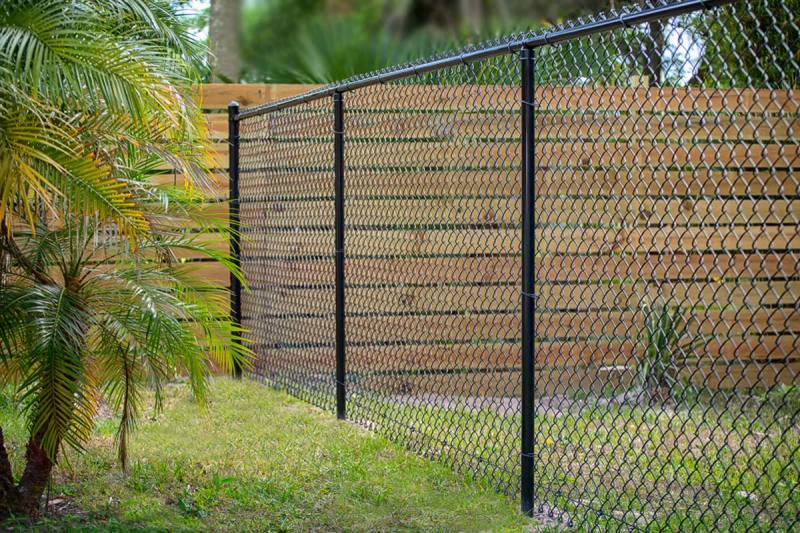
- It visually vanishes. This is the part people do not expect until they see it. Black mesh reads as a shadow against grass, trees, and shrubs — you look through it instead of at it. On a fence whose whole selling point is not blocking the view, that is a real upgrade, and it is why black chain link keeps showing up on nicer lots and around pools.
- It adds a second corrosion barrier. The polymer layer sits over the zinc, which helps in the spots that stay damp.
The trade-off is cost, plus one practical caution: if the coating gets gouged down to bare steel, that spot can corrode. Normal yard life is not a problem; dragging equipment along the fence is.

Making Chain Link Actually Dog-Proof
Chain link is one of the best dog fences there is, but only if it is built for the specific dog you own. Three failure modes, three fixes:
- Diggers. The gap under the fabric is where most escapes happen. A bottom tension wire pulls the fabric tight to grade instead of letting it flex up. For a determined digger, we can run the fabric slightly below grade or add a buried barrier along the line.
- Climbers and jumpers. Go taller than you think — five or six feet rather than four — and keep the top clean. A top rail gives an athletic dog something to push off; on climbing breeds, a tensioned top wire instead of a rail removes that purchase point.
- Chewers and pushers. This is a gauge question. Nine-gauge fabric with properly spaced posts holds up to a big dog leaning and worrying at it; light 11.5-gauge fabric bows and stretches.
Vinyl-coated fabric is also a little kinder on paws and noses than bare galvanized wire, which is a common reason dog owners upgrade. For breed-by-breed height guidance and the mistakes we see most often, our best fence for dogs guide goes deeper.
Adding Privacy to a Chain Link Fence
Chain link gives you none on its own, but you have three ways to add it without starting over:
- Privacy slats. Vinyl slats woven vertically through the mesh block most sightlines immediately and cost a fraction of a new fence. Worth knowing: slats turn an open fence into a partly solid one, so it starts catching wind. Posts and footings need to be up to that before you add them.
- Fabric windscreen. The cheapest and fastest option, common on commercial and athletic sites. It takes real wind load, so attachment quality matters here in Kansas.
- Plant it. A chain link fence is a ready-made trellis, and the right climbers turn it into a living screen for the price of a few perennials. Our guide to the best vines for chain link fences in Kansas covers what thrives here and which popular vines will wreck a fence.
If you need full, immediate, permanent privacy, none of these beat simply building the right fence. That is a wood or vinyl privacy fence — and we remove and haul away the old chain link free with every installation.
Wichita Rules: Heights, Permits, HOAs, and Calling 811
Four local items to handle before anyone digs a hole.
Zoning height limits
Wichita is more permissive here than most people assume. The Wichita–Sedgwick County Unified Zoning Code allows fences up to 8 feet within a required setback, and it does not set a lower limit for front yards. The number that actually bites is at corners and driveways: a fence more than 80 percent solid is held to 3 feet within 20 feet of where a side lot line meets the street right-of-way, and within 20 feet of a driveway intersection, so drivers can see. A separate traffic ordinance limits obstructions inside the vision triangle at intersections. HOA covenants and plat restrictions are frequently stricter than the city, and Derby, Andover, Goddard, Maize and the other communities we serve set their own rules, so confirm yours before you settle on a height.
Permits
Wichita and Sedgwick County adopt a combined building and trade code, and its list of work exempt from a building permit includes fences that are not over 8 feet high (masonry and concrete fences are treated separately and more strictly). In plain terms, a normal residential chain link fence generally does not trigger a building permit — but that is a separate question from whether it meets zoning height limits, setbacks, and easement rules, which still apply. Codes change and properties differ, so verify current requirements with the city before you build. Our Wichita fence permit guide walks through the whole process.
HOA covenants
This is the one that catches people. Plenty of Wichita-area subdivisions restrict fence materials in their covenants, and chain link is the material most commonly restricted or banned outright — especially in newer developments around Maize, Andover, and Bel Aire. Read your CC&Rs before you spend a dollar. Getting told to remove a finished fence is an expensive lesson.
Call 811 before you dig
Kansas law requires it, it is free, and fence lines are exactly where buried utilities like to hide. Contact Kansas 811 (dial 811 or file online) at least two full working days before excavation begins — weekends and holidays do not count toward that window. We handle the locate request as part of every installation we do.
One more item that is not a rule but prevents most fence disputes: know exactly where your property line is before you build, and talk to your neighbor first if the fence runs along a shared boundary. Our fence etiquette guide covers how to open that conversation well.
Building Chain Link That Survives Kansas Weather
Chain link has almost no wind load, which tempts people into thinking the build spec does not matter. It does — just at the posts rather than the panels.
- Posts set in concrete, below the frost line. Wichita’s adopted code puts the local frost depth at 24 inches. We set posts in concrete below that line, because Sedgwick County clay heaves through every freeze-thaw cycle and a shallow post walks itself loose over a few winters. Gate and corner posts go deeper than line posts.
- Terminal posts are the whole fence. Every foot of stretched fabric pulls on the end, corner, and gate posts. Oversized terminal posts with proper footings and bracing are what keep a long run from leaning inward in year three. This is the corner cheap installs cut, and it is the failure we get called out to fix most.
- Fabric tension matters. Chain link is stretched, not hung. Under-tensioned fabric sags and waves within a season; over-tensioned fabric strains the terminal posts. Getting it right is craft, not equipment.
- Top rail or top tension wire. A top rail adds rigidity and a finished look and is standard on most residential work. A tensioned top wire costs less, flexes more in wind, and denies climbing dogs a foothold. Both are legitimate — pick deliberately.
- Gate hardware is worth paying for. Gates are the moving part, so they are the first thing to fail. Wide double drive gates especially need real hinges and a properly set gate post. Our gate installation page covers walk, drive, sliding, and automatic options.
How Long Chain Link Lasts and What Eventually Goes Wrong
A properly built galvanized chain link fence is a long-lived thing — frequently decades, with vinyl-coated fabric generally holding its appearance longer. It also fails in predictable, mostly repairable ways:
- Leaning posts — almost always a footing problem, not a fabric problem. Common on fences whose posts were never set below frost depth.
- Sagging or waving fabric — lost tension, usually fixable by re-stretching rather than replacing.
- Bent top rail — a tree limb, a vehicle, or a heavy woody vine. Rails swap out individually and cheaply.
- Rust at contact points — where the coating has been scraped through, or at ground level in a spot that stays wet.
- Gates that stop latching — nearly always a shifted gate post rather than the gate itself.
The good news is that chain link is the most repairable fence we work on. A section can be re-stretched, a rail replaced, or a post reset without touching the rest of the run — see our Wichita fence repair cost guide for what those fixes typically run, and our fence maintenance guide for the yearly walk-the-line routine that catches problems early.
When Chain Link Is the Wrong Choice
We would rather lose a chain link job than sell you the wrong fence. Choose something else if:
- Privacy is the actual goal. Slats help, but a 6-foot wood or vinyl fence is the real answer. See the privacy fence guide.
- Your HOA restricts it. Non-negotiable, and worth checking first.
- Curb appeal is the priority. For a front yard or a street-facing line, ornamental wrought iron looks far better at a comparable security level. Compare all six materials we install on our fence types page.
- You are fencing acreage. On thousands of feet, ranch rail usually wins on cost and looks right on the land. Our ranch rail fence guide covers large-lot and horse properties.
- You want zero visible fence maintenance and maximum polish. Vinyl is the low-upkeep premium option — our wood vs. vinyl comparison lays out the trade-offs, and the Kansas weather materials guide ranks every option against our climate.
Frequently Asked Questions About Chain Link Fences in Wichita
How much does a chain link fence cost in Wichita, KS?
As a planning range, a 4-foot galvanized residential chain link fence runs roughly $10 to $18 per linear foot installed in the Wichita market, and a 5 to 6-foot fence runs roughly $15 to $25 per linear foot. Black or green vinyl-coated fabric adds a few dollars per foot over bare galvanized. Corners, gates, slope, wire gauge, and old-fence removal all move the number, so the only accurate price comes from an on-site walk-through. Our estimates are free and written.
What gauge chain link fence should I buy?
Nine-gauge is the standard worth specifying for a residential fence you expect to last, and it is what commercial jobs use. Lower gauge numbers mean thicker wire, so 11 and 11.5-gauge fabric is lighter and cheaper — and it is usually what makes an unusually low bid low. Six-gauge is heavy commercial fabric and is overkill for most backyards. Always ask for the gauge in writing when comparing quotes.
Do I need a permit for a chain link fence in Wichita?
The combined Wichita and Sedgwick County building and trade code exempts fences not over 8 feet high from needing a building permit, so a typical residential chain link fence generally does not require one. Zoning is a separate question, and it is also more permissive than most people expect: the Unified Zoning Code allows fences up to 8 feet in a required setback, including in front yards. What it does restrict is visibility, holding a fence more than 80 percent solid to 3 feet within 20 feet of a side lot line meeting the street right-of-way and within 20 feet of a driveway intersection. HOA covenants are often stricter than the city, and surrounding communities set their own rules, so confirm before you build.
Is black vinyl-coated chain link worth the extra cost?
For most homeowners, yes — mainly for appearance. Black mesh visually recedes against grass and landscaping so you look through the fence rather than at it, which is a significant curb-appeal upgrade over silver galvanized. The polymer coating also adds a second layer of corrosion protection over the zinc and is gentler on pets. If the fence runs along a back alley or a work yard where looks do not matter, bare galvanized is perfectly good and costs less.
Will a chain link fence hold my dog?
Yes, if it is specified for your dog. Use a bottom tension wire to close the gap at grade for diggers, go 5 or 6 feet tall for jumpers and climbers, and use 9-gauge fabric for large or strong dogs that lean and chew. A tensioned top wire instead of a top rail removes the foothold that climbing breeds use. Vinyl-coated fabric is also easier on paws and noses than bare wire.
How can I make a chain link fence private?
Vinyl privacy slats woven through the mesh are the fastest permanent upgrade and block most sightlines. A fabric windscreen is cheaper still and works as a stopgap. Climbing vines turn the fence into a living screen over a couple of seasons. Keep in mind that slats and windscreen turn an open fence into a partly solid one, so it begins catching Kansas wind and the posts need to be built for that. For full, immediate privacy, a 6-foot wood or vinyl privacy fence is the real solution.
How long does a chain link fence last?
A properly installed galvanized chain link fence commonly lasts decades, and vinyl-coated fabric tends to hold its appearance longer. Lifespan depends far more on installation than on the fabric — posts set in concrete below Wichita’s 24-inch frost depth, heavy terminal and corner posts, and correct fabric tension are what determine whether a fence is still straight in twenty years. Most chain link problems are repairable without replacing the whole fence.
Can chain link fence be installed on a slope?
Yes, and this is one of chain link’s advantages over panel fences. The fabric can follow the contour of the ground in a continuous line rather than stepping down in rigid sections, which means no triangular gaps under the fence on a sloped yard — a genuine benefit for dog owners on uneven lots.
Get a Free Chain Link Fence Estimate in Wichita
Whether you are fencing a backyard for a new dog, replacing a tired galvanized line that has started to lean, upgrading to black vinyl-coated for the look, or securing a work yard, Midwest Fence builds chain link fencing in Wichita and across the metro — residential and commercial, 3 feet to 8 feet and up, galvanized or color-coated, with gates sized to what you actually need to drive through. We are locally owned and operated, licensed and insured, and every installation is backed by a 1-year warranty on workmanship and materials plus free removal and haul-away of your old fence.
Request your free written estimate or call us at (316) 710-5824. We will walk the line with you, put the gauge, heights, and post sizes in writing, and give you a straight price. We serve Wichita, Derby, Andover, Goddard, Maize, and more — see the full list on our service areas page.