Two vinyl fences in Wichita can look identical the day they go up and be in completely different shape five winters later. One is still bright and dead straight. The other has gone chalky, the rails sag between posts, and there is a crack at the bottom where a mower threw a rock at it in January. The installer is rarely the reason. The difference is almost always what is inside the panel — the resin, the wall thickness, and whether there is an aluminum stiffener in the bottom rail.
That is the part nobody points at in a showroom, and it is what this guide is about. If you are pricing a vinyl fence in Wichita, KS, here is the short version up front: budget roughly $45 to $70 per linear foot installed for a 6-foot privacy fence, expect vinyl to cost more than wood today and less than wood over twenty years, and ask the four spec questions below before you sign anything. They take about ninety seconds and they decide almost everything about how the fence ages.

What a Vinyl Fence Actually Is
Vinyl fencing is PVC — the same family of rigid plastic as the water lines in your house. It is extruded into hollow rails, pickets, and posts, then assembled on site. There is no wood inside it, so there is nothing for rot, termites, or carpenter bees to work on, and nothing that needs stain. That is the entire pitch, and for a lot of Wichita homeowners it is enough.
The catch is that PVC is not one thing. The formula, the wall thickness, and the reinforcement vary enormously between a builder-grade panel and a premium one, and because they look nearly the same on install day, price shopping on vinyl punishes you more than on any other material we install. A cheap cedar fence is still cedar. A cheap vinyl fence is a different product.
What a Vinyl Fence Costs in Wichita (2026)
Planning ranges for the Wichita market, installed, including posts set in concrete:
- 6-foot vinyl privacy fence: roughly $45–$70+ per linear foot
- Semi-private, lattice-top, or picket-top privacy panels: roughly $50–$80 per linear foot
- 4-foot vinyl picket fence: roughly $30–$50 per linear foot
- Vinyl ranch rail (2 or 3 rail): roughly $20–$35 per linear foot
- Gates: generally $300–$900 and up, depending on width, frame, and hardware
On a typical 150-foot backyard run, a 6-foot vinyl privacy fence lands somewhere around $6,750 to $10,500. For comparison, the same run in cedar or pressure-treated pine usually comes in lower up front — our Wichita privacy fence guide and 2026 fence cost guide break the wood numbers down, and the wood vs. vinyl comparison runs the twenty-year math on both.
Bottom line: those are budgeting ranges, not quotes. Gates, corners, slope, height, and panel grade move the number by thousands on the same length of fence. Our estimates are free, written, and itemized, and every installation includes free removal and haul-away of your old fence.
Good Vinyl vs. Cheap Vinyl: The Four Questions to Ask
Ask these before you compare prices. If a contractor cannot answer them, that is your answer.
1. Is it virgin vinyl or regrind?
Virgin vinyl is PVC made from new resin. Regrind is recycled plastic that has already been melted and extruded at least once — often window and door scrap rather than fence stock. Reprocessed material loses consistency, takes color unevenly, and tends to pick up mildew faster. Some panels are co-extruded with a thin virgin outer skin over a regrind core, which looks fine until the skin weathers. Ask for virgin vinyl, and ask it plainly.
2. How thick are the walls?
This is the spec that separates a rail that holds a line from one that bows in August. Thin-wall rails deflect under wind load and sag under their own weight across an 8-foot span. Heavier extrusions cost more per foot because there is more material in them, which is exactly why the cheapest bid is usually the thinnest panel. Compare wall thickness between quotes, not just height and color.
3. Is the bottom rail aluminum-reinforced?
On a 6-foot privacy panel, the bottom rail carries the weight of every picket above it. Quality panels run an aluminum insert through that rail to stop it bowing. Without it, a long run develops a visible smile between posts, and once vinyl takes a set it does not come back. If a quote does not mention reinforcement, assume there is none.
4. Are the posts routed, or are the rails bracketed on?
In a proper vinyl system the posts are routed, and the rails slide through those openings so the panel floats. In a cheaper build, rails are screwed to the face of the post with brackets. Floating matters more here than it does in a mild climate, and the next section explains why.
How Vinyl Really Behaves in Kansas Weather
Vinyl is sold as the material that shrugs off weather. Mostly true — with three honest exceptions that matter in south-central Kansas.
It moves, and more than you would think
PVC expands and contracts with temperature far more than wood or steel. Across the hundred-degree swing between a January cold snap and a July afternoon, a 10-foot rail can change length by roughly a quarter to three-eighths of an inch, and a dark-colored fence in direct sun runs hotter than the air around it. That is the whole reason panels float in routed posts instead of being pinned tight. Fasten a vinyl rail rigidly at both ends and Kansas will find the weak point for you — usually a buckled rail in midsummer or a cracked post routing in winter.
It gets more brittle when it is cold
This is the part most vinyl sales copy skips. PVC impact resistance drops as the temperature drops. In July a basketball or a mower-thrown rock bounces off. At 15 degrees, the same impact can crack a picket. That is not a reason to avoid vinyl in Kansas — it is a reason to keep the string trimmer and the mower discharge chute pointed away from the fence in winter, and a reason to buy the thicker panel. Impact damage is also the most common vinyl repair we get called for, and the good news is that a damaged section usually unclips and swaps out without touching the posts.
Wind is a post problem, not a panel problem
A 6-foot solid vinyl fence is a sail. So is a 6-foot solid wood fence — the physics do not care about the material. What differs is the failure mode. Wood tends to lose individual boards and stay standing. Vinyl tends to fail at the connection, popping a rail out of the post routing or taking a whole panel with it. The fix in both cases is the same, and it happens below grade: bigger post holes, more concrete, correct post spacing, and rails that are not over-spanned. Our wind-resistant fence guide covers the storm-season details, and best fence materials for Kansas weather ranks every option we install.
How we usually call it: vinyl is an excellent Wichita fence when it is a quality panel on properly sized and spaced posts. It is a poor Wichita fence when it is a thin builder-grade panel on undersized posts, because our wind finds that combination every spring.
Sun, hail, and fading
Good vinyl carries UV inhibitors — titanium dioxide in the formula — that keep the color from chalking and yellowing under our summer sun. This is a real difference between grades, and it is why a bargain white fence can look dingy in six years while a premium one still looks clean. Hail generally does not hurt vinyl the way it dents aluminum, though large stones can crack a cold panel. And unlike a wood fence, vinyl never needs staining or sealing to hold its finish.
Setting Vinyl Posts in Sedgwick County Clay
Our soil is heavy clay that swells when it is wet and shrinks when it is dry, and it moves fences. Combine that with freeze-thaw cycling and post setting stops being a detail.
- Below the frost line. Wichita frost depth is about 24 inches. Footings need to go below it, or the ground will lift the posts over a few winters and your top line will start to wander.
- Concrete, properly sized. Vinyl posts are hollow, so the footing is doing all the structural work. Undersized holes are the single most common reason a vinyl fence leans.
- Post spacing that matches the panel. Stretching spacing to save a post or two is how you get sagging rails. The panel dictates the spacing, not the other way around.
- Room to move. Panels need to float in the routing, and gate gaps need to be set with thermal movement in mind so the latch still catches in February and the gate still clears in August.
- Call 811 first. Kansas requires two working days notice before digging, and it is free. Note that 811 marks utility-owned lines only — private runs past your meter, like a gas line to a detached garage or an irrigation main, are yours to locate.
This is most of what separates a professional fence installation from a weekend project, and it is the part you cannot inspect after the concrete cures.
Vinyl Is Not Just White Privacy Panels
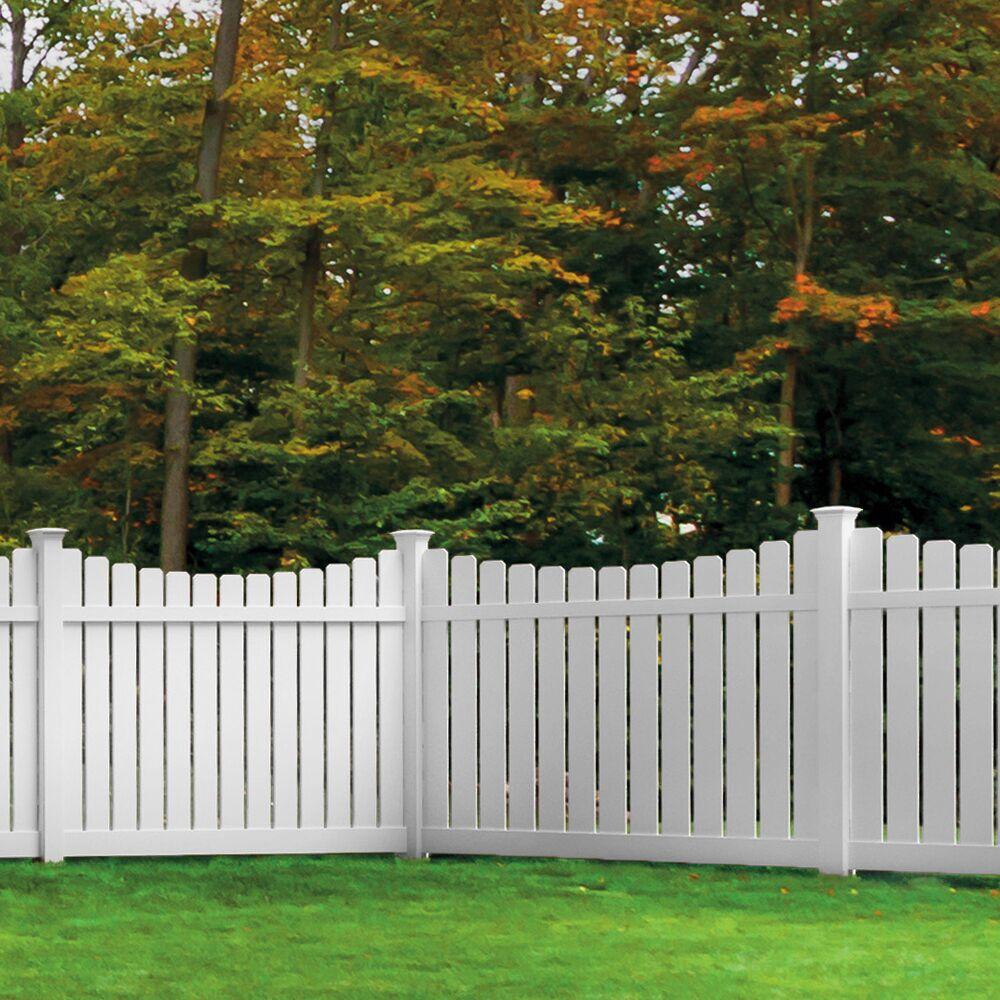
Most people picture a solid white privacy panel, but vinyl is manufactured in most of the styles we build in other materials:
- Full privacy, tongue-and-groove, typically 6 feet and sometimes 8 — the standard backyard fence.
- Semi-privacy and shadowbox, which let air through. Worth considering on an exposed lot where a solid panel would take the full force of a south wind.
- Lattice-top and picket-top privacy, for a less institutional look along a patio.
- Picket, usually 3 to 4 feet, for front yards, gardens, and dog runs.
- Ranch rail, 2, 3, or 4 rail — see our ranch rail guide for how it works on acreage.
- Pool enclosures, where vinyl gives you privacy that ornamental iron cannot.
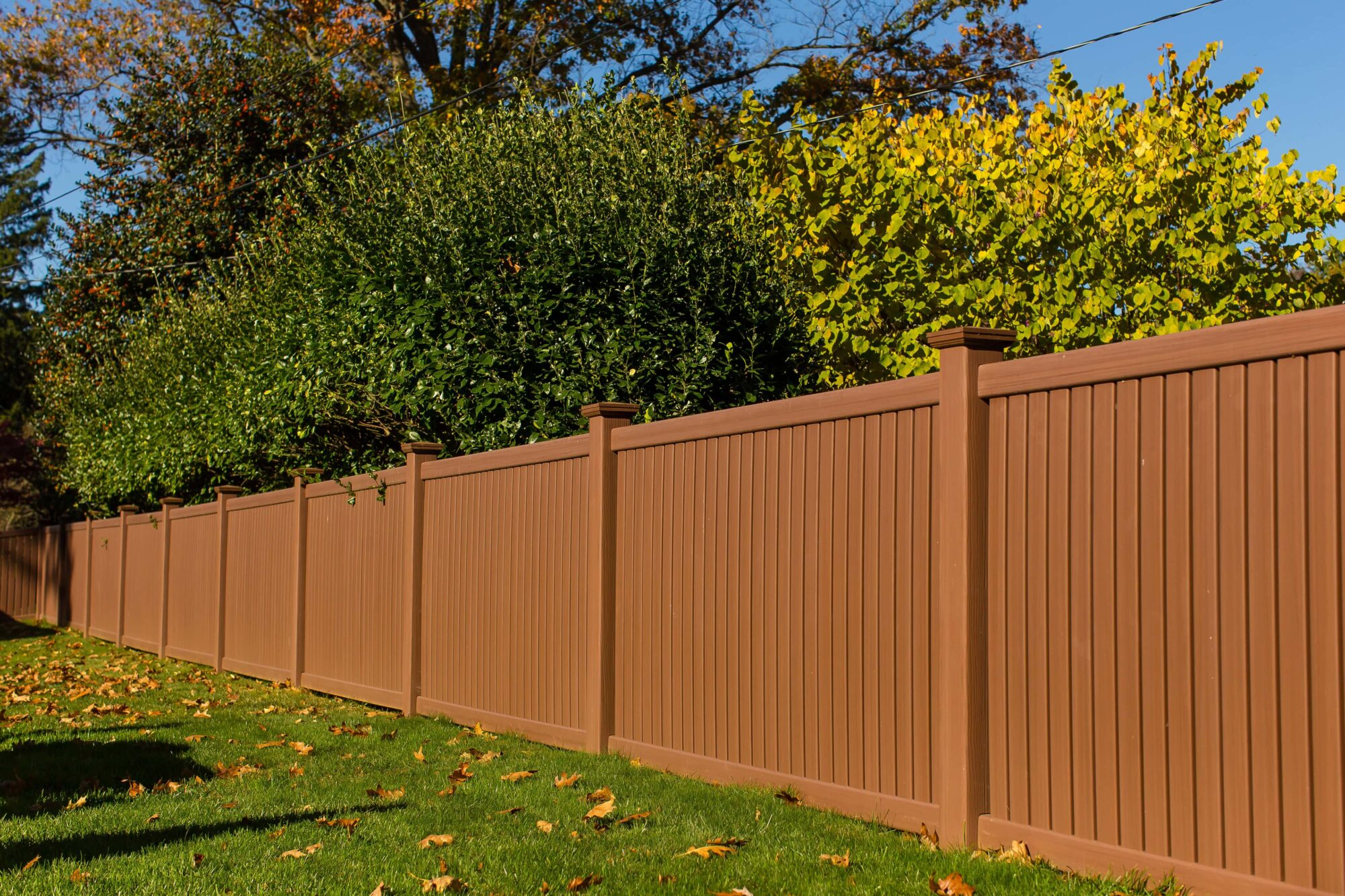
Color is not just white anymore, either. Tan, clay, khaki, gray, and woodgrain finishes are all available, and the darker and woodgrain options generally carry a heavier UV package because they have to. Browse the full material lineup on our fence types page, or see finished projects in the gallery.
When Vinyl Is the Right Call — and When It Is Not
Vinyl is usually the right call when:
- You are done with staining. This is the number one reason our customers switch. No refinishing every two or three years, no graying, no sanding.
- You are staying in the house. The math works over fifteen or twenty years, not over three.
- You want a smooth, splinter-free surface. A real consideration around kids and around a pool. If a pool is the project, our pool fence guide covers the 60-inch barrier requirement under Wichita city code 7.72.020.
- You have dogs. There is nothing to chew and nothing to claw through, and a solid panel removes the fence-line barking trigger. The best fence for dogs guide goes deeper, including what to do about diggers.
- Your HOA wants a uniform look. Vinyl holds its appearance without any homeowner effort, which is exactly what covenants are written to protect.
Vinyl is usually the wrong call when:
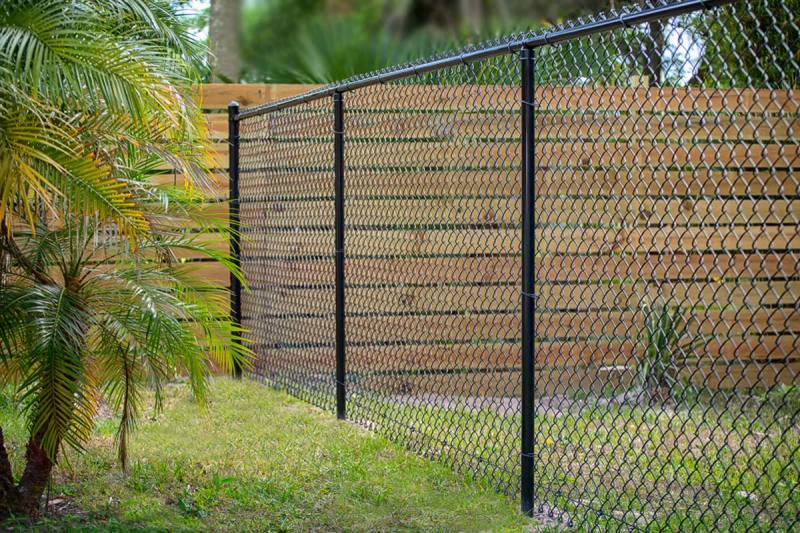
- Budget is the constraint. Wood costs less today. Chain link costs much less than either, and black vinyl-coated chain link is a genuinely good-looking low-cost option.
- You are fencing acreage. On thousands of feet, the per-foot premium is punishing. Ranch rail or chain link is the answer.
- You want a custom design. Vinyl comes in manufactured profiles. Board-on-board, horizontal slat, and one-off designs are a wood conversation.
- You want to restain a different color in five years. Vinyl is the color you buy.
- The job is heavy-duty security or a commercial perimeter. That is ornamental steel or chain link — see commercial fencing.
On lifespan, vinyl is among the best we install. Our fence lifespan guide puts quality vinyl at 20 to 30 years, against 15 to 20 for cedar and roughly 7 to 10 for untreated pine — and a fence that still looks new at resale is one of the materials that does the most for curb appeal and home value.
Wichita Rules: Height, Permits, and HOA Covenants
Height
The Unified Zoning Code allows fences up to 8 feet in front, rear, and side yards — there is no separate, lower front-yard limit. The restriction that catches people is about visibility, not height: a fence more than 80 percent solid is held to 3 feet within 20 feet of where a side lot line meets the street right-of-way, and within 20 feet of a driveway intersection. A solid vinyl privacy panel is squarely in that more-than-80-percent category, so corner lots need planning.
Permits
The combined Wichita and Sedgwick County building and trade code exempts fences not over 8 feet high from needing a building permit, so a standard residential vinyl fence generally does not require one. Surrounding communities set their own rules. Our Wichita fence permit guide has the details.
HOA covenants
This is where vinyl gets interesting, because covenants cut both ways. Some neighborhoods require a uniform white or tan vinyl on shared lines. Others prohibit vinyl outright in favor of wood or ornamental. Many specify color, height, and which side the finished face points. Read the covenants and get written approval before you order panels — vinyl is manufactured to order, and it is not a cheap mistake to undo.
Property lines
Build on or inside your line, and talk to the neighbor first. Our fence etiquette guide covers the conversation and what Kansas law says about shared boundaries.
About Those Lifetime Warranties
Most vinyl manufacturers advertise a limited lifetime warranty, and it is worth understanding what that is. It generally covers the panel against manufacturing defects — cracking, peeling, excessive fading — and it is typically prorated and often limited to the original owner. What it does not cover is impact damage, storm damage, or anything traceable to installation.
Which means the manufacturer warranty and the installer warranty protect different things, and you want both. Every Midwest Fence installation is backed by our own 1-year warranty on workmanship and materials, on top of whatever the manufacturer provides on the panel.
Frequently Asked Questions About Vinyl Fences in Wichita
How much does a vinyl fence cost in Wichita, KS?
As a planning range for the Wichita market in 2026, a 6-foot vinyl privacy fence runs roughly $45 to $70 per linear foot installed, which puts a typical 150-foot backyard around $6,750 to $10,500. A 4-foot vinyl picket fence runs roughly $30 to $50 per linear foot, and vinyl ranch rail roughly $20 to $35. Gates are priced separately, generally $300 to $900 and up depending on width and hardware. Panel grade, height, gates, corners, and slope all move the number, so the only accurate price comes from an on-site walk-through. Our estimates are free and written.
Does a vinyl fence hold up to Kansas wind?
A quality vinyl fence does, and the reason has more to do with the installation than the material. Any 6-foot solid fence is a sail, whether it is vinyl or wood. What keeps it standing is below grade: post holes sized correctly, footings poured below the 24-inch frost depth, and post spacing matched to the panel rather than stretched. Where vinyl differs from wood is the failure mode — wood usually loses individual boards, while vinyl tends to pop a rail out of the post routing or lose a whole panel. Thin builder-grade panels on undersized posts are the combination that fails here.
Does vinyl fence crack in cold weather?
PVC does become more impact-brittle as the temperature drops, so a strike that would bounce off in July can crack a picket at 15 degrees. In practice this is a maintenance habit rather than a dealbreaker: keep mower discharge and string trimmers pointed away from the fence, and buy the thicker panel. Cold alone does not crack a vinyl fence sitting undisturbed — impact does. When a section is damaged it usually unclips and swaps out without disturbing the posts, which makes vinyl one of the easier materials to repair.
Is vinyl or wood better for a Kansas privacy fence?
Wood costs less up front, offers a natural look, can be stained any color, and gives you more design options like board-on-board and horizontal slat. Vinyl costs more initially but never needs staining, will not rot or attract insects, and typically lasts 20 to 30 years against 15 to 20 for cedar. If you are staying in the house long term and do not want to spend weekends refinishing, vinyl usually wins on total cost of ownership. If upfront budget is the priority, or you want a custom design, wood wins.
Do I need a permit for a vinyl fence in Wichita?
Generally no. The combined Wichita and Sedgwick County building and trade code exempts fences not over 8 feet high from needing a building permit, and the Unified Zoning Code allows up to 8 feet in front, rear, and side yards. The rule that catches people is the visibility restriction: a fence more than 80 percent solid, which includes any solid privacy panel, is limited to 3 feet within 20 feet of where a side lot line meets the street right-of-way and within 20 feet of a driveway intersection. HOA covenants are frequently stricter than the city, and surrounding communities set their own rules, so confirm before you order.
Can you paint or stain a vinyl fence?
Practically speaking, no — plan on the color you buy being the color you keep. Vinyl is not porous, so stain will not penetrate it at all, and while specialty paints formulated for PVC do exist, they add a recurring maintenance job to a material chosen specifically to eliminate one. Painting can also void the manufacturer warranty, and a dark paint on a light panel adds heat the extrusion was never designed for. If being able to change color later matters to you, that is a strong argument for a wood fence.
Get a Free Vinyl Fence Estimate in Wichita
Whether you are replacing a tired wood fence in an older Wichita neighborhood, fencing a new backyard in Maize or Andover, enclosing a pool so you never have to stain around it, or finally ending the every-few-years refinishing cycle, Midwest Fence installs vinyl fencing in Wichita and across the metro — privacy, semi-privacy, picket, ranch rail, and pool enclosures, in white, tan, gray, and woodgrain, with matching gates. We are locally owned and operated, licensed and insured, and every installation is backed by a 1-year warranty on workmanship and materials plus free removal and haul-away of your old fence.
Request your free written estimate or call us at (316) 710-5824. We will walk the line with you, tell you honestly whether vinyl or wood is the better buy for your lot and how long you plan to stay, put the panel grade, height, color, and gate sizes in writing, and give you a straight price. Compare every material side by side on our fence types page, and if you need a gate wide enough for a mower or a truck, see our gate installation options. We serve Wichita, Derby, Andover, Goddard, Maize, Mulvane, and more — the full list is on our service areas page.