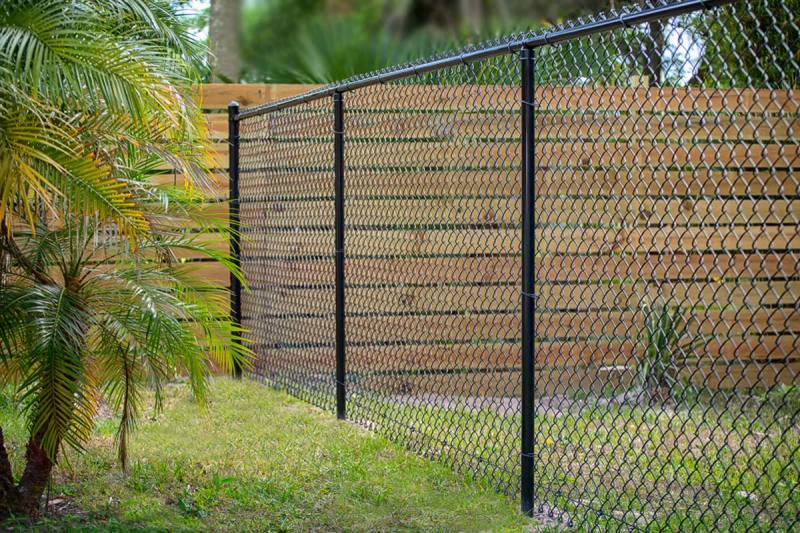

If you own five acres outside Goddard, a horse property near Rose Hill, or one of the large-lot builds going up around Andover and Bel Aire, your fence problem is not the same as a quarter-acre backyard in central Wichita. You are not hiding a hot tub from the neighbors. You are marking a boundary across a long run, keeping animals where they belong, and doing it without turning a Kansas horizon into a wall of cedar. That is the job a ranch rail fence was built for.
Ranch rail — also called split rail or post-and-rail — is the most economical way to fence a lot of ground. But “economical” only holds if it is built right, and there are a handful of things about our part of Kansas that change the spec: clay soil that heaves, wind that never quits, long runs where a small mistake repeats itself two hundred times, and a state fence law that actually says something about who pays for the line between you and your neighbor. This guide covers all of it.

Why Ranch Rail Fits Wichita-Area Acreages
Drive out past 135th Street West, south toward Mulvane, or east of Andover and the fence styles change. Solid privacy panels give way to open rail. There are four practical reasons for that, and none of them are about looks alone:
- Cost per foot is the lowest of any built fence. When your perimeter is measured in thousands of feet instead of hundreds, the difference between $15 and $40 per linear foot is the difference between a project you can do this year and one you cannot.
- Wind passes straight through. A 6-foot privacy fence is a sail. Ranch rail is mostly air. On an exposed lot with no windbreak — which describes most acreage around Goddard, Maize, and Valley Center — that is the single biggest reason rail fences outlive solid ones.
- It keeps the view. Most people who buy acreage bought it for the open sightlines. A rail fence marks the line without erasing the reason you moved out there.
- Repairs are simple and cheap. A cracked rail is a fifteen-minute fix with one board. A damaged privacy panel is a section rebuild. That gap widens over decades, and it is why our fence repair calls on rail fences are almost always small ones.
What ranch rail does not give you is privacy or security. If you need to screen a patio, contain a small dog reliably, or keep people out, rail alone is the wrong tool — though the wire-backing option further down solves the dog problem, and plenty of properties we fence use rail on the perimeter and a section of wood privacy or vinyl around the house.
Ranch Rail Styles: 2-Rail, 3-Rail, 4-Rail, and Crossbuck
The rail count is not a style decision. It is a containment decision, and picking it wrong is the most common mistake we correct on acreage properties.
Two-Rail
The most open configuration and the cheapest per foot. Two rails mark a boundary and slow a vehicle down. They will not contain anything smaller than a full-grown cow, and they will not stop a dog. Good for decorative frontage, driveway lines, and pasture divisions where the animals are large and calm.
Three-Rail
The workhorse, and what we install most often across the Wichita metro. Three rails at roughly 4 to 4.5 feet of total height contain cattle and suit most open horse pasture, read clearly to drivers and neighbors, and give most acreage buyers the fence they were picturing when they said “ranch fence.” If you are not sure what you need, this is usually it — though tighter horse paddocks generally want more height, which the horse section below covers.
Four-Rail
Tighter spacing between rails, taller overall, and noticeably more substantial. Four-rail is the right call for horse properties with foals or smaller breeds, for paddocks where animals crowd the fence, and for entry frontage where you want the fence to look like a statement. It costs more per foot because it is more material and more fasteners, not more labor.
Crossbuck
The X-brace pattern between posts. Crossbuck is primarily an aesthetic choice — it is the “Kentucky horse farm” look — and it is popular on entry runs, along driveways, and at the road frontage of properties that go plain rail everywhere else. It is the most expensive rail style per foot and the most labor-intensive to build straight.
We build all four configurations, plus custom heights, in wood or vinyl, as part of our standard fence installation service. If you want to see how rail compares to the other five materials we install, the fence types page lays them out side by side. Rail also does real work on the commercial side — rural businesses, equestrian operations, and large lots on the edge of the metro use it to define long perimeters affordably, which our commercial fencing page covers alongside chain link and ornamental steel.
Wood or Vinyl Ranch Rail in Kansas Weather
Both work here. They fail differently, and that is what should drive the decision.
Wood is what most people mean by ranch rail, and it is the cheaper way in. It looks right on a Kansas property, it can be stained any color, and a broken rail costs almost nothing to swap. The trade-off is UV and moisture cycling: Kansas summers past 100°F followed by wet springs will split and cup rails over time. Plan on a stain or seal every 3 to 4 years to slow that down, and expect to replace a rail here and there over the life of the fence. Our fence staining guide walks through prep and product selection if you plan to do it yourself, and the Wichita fence maintenance guide has the year-round routine for rail fences.
Vinyl ranch rail costs more up front and never needs staining, never rots, and never gets chewed. On a long run that is real money saved in labor over 20 years. The caution is material grade — the spread between premium and bargain vinyl is enormous in a hail state. Thin-wall hollow vinyl gets brittle in our heat and cracks when a storm comes through. If you go vinyl, specify heavy-wall material and expect to pay for it.
One honest note that applies to horse owners specifically: vinyl rail is designed to pop out of the post under heavy impact rather than shatter, which is generally safer for the animal. Wood rail can splinter. Neither is a reason by itself to pick one over the other, but it belongs in the conversation. For a broader material comparison across Kansas conditions, see our Kansas weather fence materials guide.
Wire Backing: Making an Open Fence Actually Contain Something
This is the add-on most acreage owners end up wanting and the one most people do not know exists. Woven wire mesh attached to the inside face of a rail fence keeps the open look from the road while closing the gaps that dogs, goats, sheep, and foals walk straight through.
- For dogs, welded or woven wire backing turns a decorative fence into a real containment fence. Run it to the ground, or a few inches below grade if you own a digger. Our guide to the best fence for dogs covers jumpers, diggers, and chewers in more detail.
- For horses, no-climb mesh with roughly 2-inch by 4-inch openings is the standard, specifically because a hoof cannot get through it. Larger square field fence can trap a hoof or a shoe, which is exactly the injury you are fencing to prevent.
- For small livestock, tighter mesh at the bottom and a graduated opening upward is the usual spec.
Wire backing adds material and labor cost per foot, but it is far cheaper than fencing twice. Decide before we set posts, because it changes hardware and sometimes post spacing.
Fencing for Horses: What Actually Changes
Horse fencing is where the shortcuts get expensive, and a vet bill dwarfs the cost of doing it right the first time.
- Barbed wire does not belong around horses. This is not a preference, it is the near-universal recommendation from equine sources. Horses panic and run through fences; barbed wire turns that into deep lacerations. It is common on Kansas cattle ground and it is still a bad idea on horse ground.
- Visibility matters more than strength. A horse has to see the fence to respect it. That is the argument for a wide top rail on any wire-based system — the rail is what the animal reads at a gallop.
- Height depends on the horse. Widely cited guidance runs about 4.5 feet for pasture divisions and roughly 5 feet for standard paddocks, going higher for stallions, jumpers, and escape artists. Your situation drives the number.
- Leave the bottom gap deliberate. A gap of roughly 6 to 8 inches at the ground keeps a hoof from getting pinned under the bottom rail. If you are backing with mesh instead, that logic reverses and the mesh goes to grade.
- Gates are where injuries happen. Wide, smooth-latching gates with no protruding hardware at chest height. Cheap gate hardware on a horse property is a false economy.
We are fence builders, not equine consultants — if you board or breed, your vet and trainer should have the final say on height and configuration. What we can tell you is how to build whatever they specify so it stands up to Kansas weather.

What Kansas Fence Law Says About Rural Property Lines
Here is the part almost no fencing article written for a national audience will tell you, and it matters more on acreage than anywhere else. Kansas has an actual statutory fence law — Chapter 29 of the Kansas Statutes — and it governs boundary fences between rural properties.
What Kansas calls a “legal fence”
K.S.A. 29-102 sets a baseline: fences made of posts and rails, posts and planks, or posts and wire are to be at least four feet high, with the bottom rail or board no more than two feet off the ground, and built substantially enough “to prevent domestic animals, other than cats and dogs from going through.” For wire fences, K.S.A. 29-103 goes further and calls for posts set at least two feet deep and no more than twelve feet apart, carrying four strands of wire no smaller than No. 9.
Two things worth knowing about those numbers. First, they are a livestock-containment standard, not a modern building code — a two-foot post depth is the statutory floor, and it is well short of what we would actually install in Sedgwick County clay. Second, inside city limits your local zoning code controls materials and heights, not the state statute. If your property sits inside Wichita, Derby, Andover, or another municipality, start with our Wichita fence permit guide instead.
Who pays for the fence between two properties
K.S.A. 29-301 is the one to know: adjoining landowners “shall keep up and maintain in good repair all partition fences between them in equal shares, so long as both parties continue to occupy or improve such lands, unless otherwise agreed.” In plain English, on rural land a boundary fence is generally a shared obligation, split down the middle, unless you and your neighbor agree to something else.
There is a meaningful exception in K.S.A. 29-309: a landowner who is not enclosing or using their land, other than in common, generally cannot be forced to chip in — until they do enclose or use it, at which point the obligation attaches. Kansas also has an old and still-active office called the fence viewer (Chapter 29, Article 2) for resolving disputes over shared fences.
None of this is legal advice, and how it applies to your specific line depends on your county, your deed, and how the land is used. But it is a good reason to have the conversation with your neighbor before you dig, not after. Our guide to sharing a fence line with a neighbor covers how to open that conversation without starting a feud.
Building Ranch Rail That Survives Kansas Wind and Clay Soil
A rail fence has almost no wind load, which fools people into thinking the build spec does not matter. On acreage the opposite is true: the posts carry everything, the runs are long, and any mistake repeats itself hundreds of times.
- Posts set in concrete, below the frost line. Sedgwick County frost depth runs around 30 inches. We set posts in concrete deep enough to sit below it, because our clay soil heaves through every freeze-thaw cycle and a shallow post walks itself out of the ground over a few winters. Line posts on a rail fence do not need the 36-inch depth a 6-foot privacy fence demands, but they need to be below frost, and gate and corner posts go deeper.
- Corners and gate posts are the whole ballgame. On a long run, every foot of rail is pulling on the corner assemblies. Oversized corner posts, deeper footings, and proper bracing are what keep a quarter-mile of fence from sagging out of line in year three.
- Galvanized fasteners, no exceptions. Plain steel fasteners bleed rust down wood rails within a season and fail early. Every rail fence we build uses galvanized hardware.
- Follow the grade, do not fight it. Acreage is rarely flat. Rail fence can step or rack to follow terrain; deciding which before we start is what separates a fence that looks intentional from one that looks improvised.
- Plan the gates for equipment, not people. The most common regret we hear on acreage is a gate too narrow for a tractor, trailer, or mower deck. Measure your widest piece of equipment, then add margin. Our gate installation page covers walk, double-drive, sliding, and automatic options.
For the full storm-season picture on how Wichita wind treats every fence type, our wind-resistant fence guide goes deeper on post depth, spacing, and hardware.
What Ranch Rail Fencing Costs in the Wichita Area
Ranch rail is quoted per linear foot like every other fence, and it is the least expensive material we install. As a planning range in the Wichita market:
- Wood ranch rail: roughly $12–$25 per linear foot installed, depending on rail count, height, and wood grade.
- Vinyl ranch rail: more per foot than wood, with the premium buying you a fence that never needs staining.
- Wire backing: an add-on cost per foot on top of the rail fence, varying with mesh type.
- Crossbuck: the highest rail style per foot because of the extra material and layout labor.
Cost by the acre, not by the foot
The number most acreage owners actually want is “what does it cost to fence my place,” and that takes one step of math first. Fencing a square lot means covering its perimeter, and here is roughly what that perimeter runs at common acreages, with the wood rail range applied:
- 1 acre — about 835 linear feet — roughly $10,000–$20,900
- 2.5 acres — about 1,320 linear feet — roughly $15,800–$33,000
- 5 acres — about 1,865 linear feet — roughly $22,400–$46,700
- 10 acres — about 2,640 linear feet — roughly $31,700–$66,000
- 20 acres — about 3,735 linear feet — roughly $44,800–$93,300
Notice what that list is telling you: fencing cost does not scale with acreage. Five acres is five times the land of one acre but only a bit more than twice the fence. Twenty acres is twenty times the land and only about four and a half times the fence. If you are deciding between fencing the whole parcel or just a paddock near the house, that math usually argues for doing more perimeter than you first planned — and it is the single most useful thing to know before you call anyone for a price.
Treat all of those as planning numbers, not quotes. Real lots are not square, and the things that actually move a ranch rail price are rail count, gate count and width, terrain and tree line, whether wire backing is included, and how much of the run a truck and auger can reach. Our 2026 fence cost guide breaks down pricing across every material we install, and the only number that means anything for your property comes from an on-site walk. Those are free, and so is hauling away an old fence when we install a new one.
Before You Build: Lines, Utilities, and Permits
- Know where your line actually is. On acreage, “the old fence” and “the property line” are frequently not the same thing, sometimes by several feet. If there is any doubt, a survey is cheap compared to moving a quarter-mile of fence.
- Call Kansas 811 before anyone digs. It is free and it is the law. Kansas requires notice two full working days ahead, not counting the day you call, weekends, or holidays. You can call 811 or file the request online through Kansas 811. We handle this on every job we install.
- Check whether you are in city limits. Rural Sedgwick County and municipal Wichita, Derby, or Andover are different rulebooks. Zoning, setbacks, and permit requirements vary, and corner lots have sight-triangle rules that keep fences low near intersections.
- Check the HOA if you have one. Some of the large-lot developments around Andover, Maize, and Bel Aire have covenants that specify rail count, color, and finish even on acreage-style lots.
- Talk to the neighbor. Especially given what K.S.A. 29-301 says about shared maintenance on rural boundary fences.
Frequently Asked Questions About Ranch Rail Fencing
How much does a ranch rail fence cost in Wichita, KS?
Wood ranch rail runs roughly $12 to $25 per linear foot installed in the Wichita market, which makes it the least expensive fence type we build. Vinyl ranch rail costs more per foot but never needs staining. Rail count, height, gate width and quantity, wire backing, and terrain all move the number. For perimeter planning, a square one-acre lot is about 835 linear feet and a square five-acre lot is about 1,865 linear feet. The only accurate price comes from a free on-site estimate.
How many rails do I need for a horse fence?
Three-rail is the most common configuration for horses and cattle on Wichita-area properties and is what we install most often. Four-rail is the better choice for foals, smaller breeds, and paddocks where animals crowd the fence, because the tighter rail spacing leaves fewer gaps. Two-rail marks a boundary but does not reliably contain livestock. Your vet or trainer should have the final word on height for your specific animals.
Is barbed wire safe for horses in Kansas?
No. Barbed wire is common on Kansas cattle ground but it is widely considered unsafe around horses, because a horse that spooks and runs into it can suffer severe lacerations or entanglement injuries. Visible wood or vinyl rail, or no-climb woven wire mesh with a top rail, is the safer standard for horse properties.
Will a ranch rail fence keep my dog in the yard?
Not on its own — the gaps between rails are wide open. Adding woven or welded wire mesh backing to the inside face of the fence closes those gaps while keeping the open rail look from the road. Run the mesh all the way to the ground, or slightly below grade if your dog digs.
Who pays for a fence between two rural properties in Kansas?
Under K.S.A. 29-301, adjoining Kansas landowners are generally required to maintain partition fences between them in equal shares, as long as both parties occupy or improve their land and have not agreed otherwise. K.S.A. 29-309 exempts a landowner who is not enclosing or using their land until they do. How this applies to your specific boundary depends on your county, deed, and land use, so treat it as a starting point for the conversation rather than legal advice.
How deep do ranch rail fence posts need to be in Kansas?
Deep enough to sit below the local frost line, which runs around 30 inches in Sedgwick County, set in concrete. Kansas clay heaves through every freeze-thaw cycle and a shallow post works its way loose over a few winters. Corner, brace, and gate posts go deeper than line posts because they carry the tension of the entire run.
Does ranch rail fencing hold up to Kansas wind?
Better than any solid fence. Wind passes between the rails instead of pushing against a panel, so a rail fence never takes the sail loading that knocks down 6-foot privacy fences during Wichita storm season. The failure point on rail fences is not wind, it is post depth and corner bracing.
Get a Free Ranch Rail Fence Estimate in Wichita
Whether you are fencing five acres outside Goddard, a horse paddock near Mulvane, a large lot in Andover, or a driveway frontage in Derby, Midwest Fence builds ranch rail fencing in Wichita and across the metro — two, three, and four-rail, crossbuck, wood or vinyl, with wire backing where you need containment. We are locally owned and operated, licensed and insured, and every installation is backed by a 1-year warranty on workmanship and materials plus free removal of your old fence.
Request your free written estimate or call us at (316) 710-5824. We will walk the line with you, talk through rail count and gate placement, and give you a straight price in writing. See every community we serve on our service areas page.