Why Wind-Resistant Fence Design Matters in Wichita
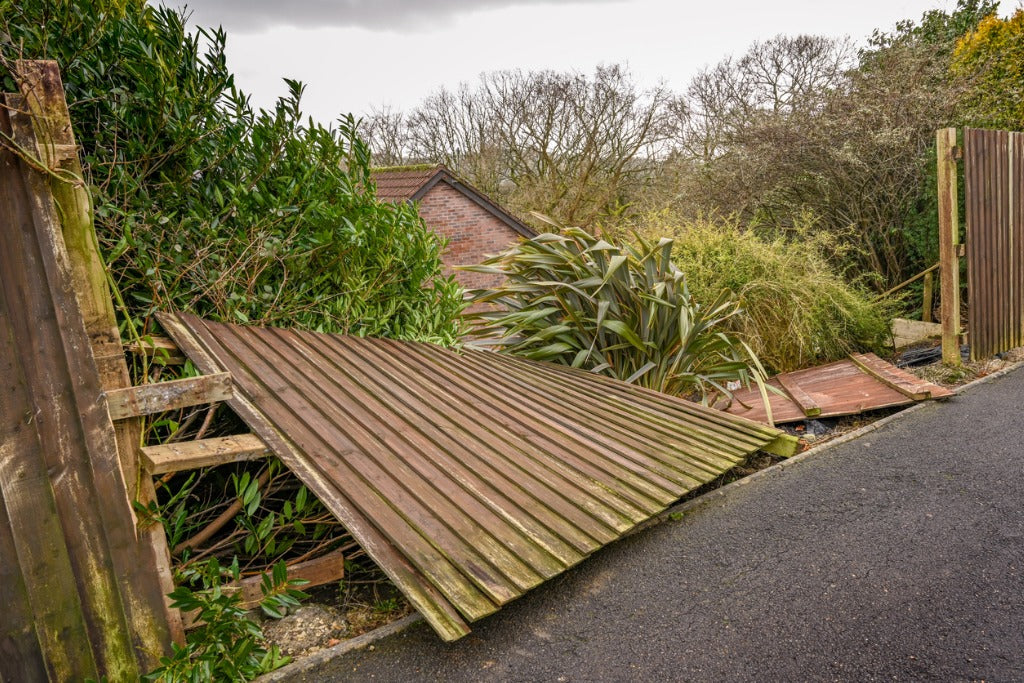
Wichita sits squarely inside Tornado Alley, which means a wind-resistant fence in Wichita has to do more than mark a property line. Severe weather rolls through Sedgwick County every spring and early summer, and a fence in our part of Kansas faces 20–30 mph daily breezes, regular 60–80 mph straight-line gusts during thunderstorms and derechos, and the occasional 100+ mph tornado-spawned wind. Add hail, ice loading in winter, and the freeze-thaw cycle that pushes shallow posts out of the ground every spring, and the fence in your backyard is one of the most weather-exposed structures on your property.
This guide is written for Wichita-area homeowners, property managers, and business owners who want a fence that survives storm season instead of becoming an annual repair line item. We will walk through which fence materials handle wind best, the construction details that make any material storm-tougher, how to prep your fence before a storm, and what to inspect and document after one. If you have already lost a fence and need to rebuild, our fence repair team and our new-build installation crews serve every community in the metro — Wichita, Derby, Andover, Goddard, Maize, Mulvane, Bel Aire, Haysville, Park City, Augusta, Rose Hill, and Valley Center.
A note on numbers: Wind-load engineering is highly site-specific. The post depths, concrete volumes, and panel spacings below reflect what we install across the Wichita area based on local soil, the Sedgwick County frost line, and historical wind data. Your specific lot, exposure, and HOA may call for something different. When in doubt, ask for a site visit.
What “Wind-Resistant” Actually Means for a Fence
Wind does three different things to a fence, and each one calls for a different design response:
- It pushes: Steady high-velocity wind exerts horizontal pressure on every solid panel. Wider, taller, and more solid panels catch more wind — like a sail.
- It pulls: Gusts and vortices create suction on the lee (downwind) side of a fence. That suction is what rips boards loose and lifts vinyl panels out of their channels.
- It throws debris: Tree limbs, trampolines, patio furniture, and hailstones become projectiles in a Kansas thunderstorm. A storm-tough fence has to take an impact, not just resist a steady push.
A truly wind-resistant fence answers all three: it lets some wind through (or it has the post strength and panel attachment to handle a fully loaded sail), it has hardware that does not pull free under suction, and it uses materials that absorb impact without shattering. Most factory-spec fences answer one of those well. Engineering for all three is the difference between a fence that lasts one bad storm and a fence that lasts twenty.
Best Wind-Resistant Fence Materials for Kansas

Here is how the materials we install rank for storm-season performance in the Wichita market. For a broader read on how each material handles full-year Kansas weather (heat, freeze, UV, ice), see our Kansas weather fence materials guide.
Chain Link — The Most Wind-Resistant Option
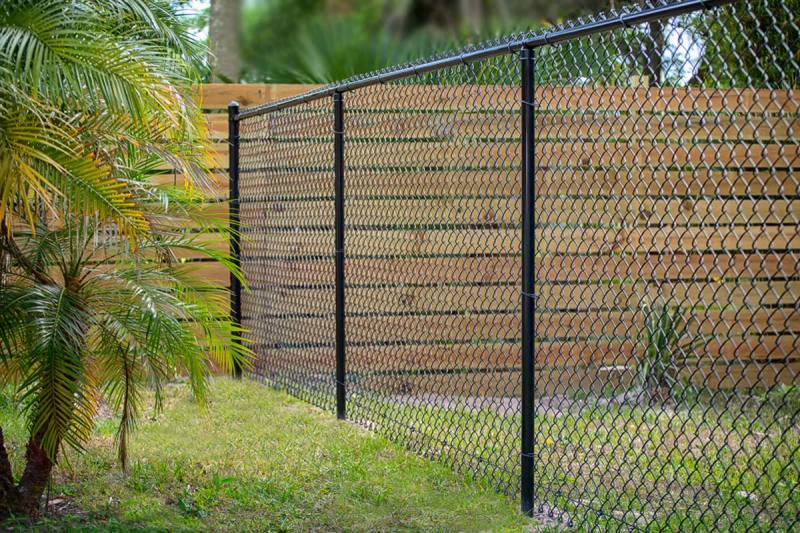
Chain link is, hands down, the most wind-resistant fence material on the market. The mesh lets wind pass straight through, so there is virtually nothing for a gust to push against. Heavy-duty galvanized posts and a continuous top rail tie the system together, and most properly built chain link will shrug off a 70 mph straight-line wind without flinching.
- Best fit: open lots, large yards, dog runs, commercial sites, and any property where wind exposure is the dominant concern.
- Watch out for: hail can dent a galvanized top rail, and severe wind can stretch the mesh if tension wires are not properly tightened.
- Cosmetic upgrade: black vinyl-coated chain link almost disappears against landscaping while keeping every wind-resistance benefit. It is a popular look on newer Wichita and Andover homes.
If wind survival is the top priority and you can live with the look, chain link is the right answer. See our fence types page for the chain link gauges, heights, and installation styles we offer.
Wrought Iron & Ornamental Steel — Best for Hail
Powder-coated wrought iron and ornamental steel are the most hail-resistant fences we install in the Wichita area. The pickets are spaced for visibility, so wind passes between them, and the steel itself shrugs off impact that would crack vinyl or splinter wood. Lifespans of 40–70+ years are realistic with basic care, per our fence lifespan guide.
- Best fit: front-yard fences, pool enclosures, perimeter security, and any setting where you want strength without giving up sight lines.
- Watch out for: bare iron rusts quickly after a paint chip from hail. Powder coating and prompt touch-up are critical.
- Wind performance: excellent — the open picket pattern does not catch wind the way a privacy panel does.
Ranch Rail & Open-Picket Wood — Wind Passes Through
Ranch rail (split rail or post-and-rail) and open-picket wood styles get most of the wind-resistance benefit of chain link with a more traditional look. Wind passes between the rails or pickets instead of pushing on a wall of wood. These styles are common on the larger acreages in Mulvane, Goddard, and the rural fringes of Sedgwick County.
- Best fit: rural properties, horse pasture, large lots, and homes that want a rustic look over solid privacy.
- Watch out for: wide rails can twist and crack under prolonged UV and moisture cycling. Replace cracked rails before they fail in the next storm.
- Add-on: wire mesh backing keeps pets and kids contained without adding meaningful wind load.
Wood Privacy — Strong, But It Has to Be Built Right
Wood privacy fences are the most popular fence type in Wichita and the one most often hit hardest by storms. A 6′ solid cedar privacy fence catches a lot of wind, which is why proper post depth, post spacing, and panel attachment are critical. A well-built privacy fence will outlast a poorly built one by a factor of three in our climate.
- Best fit: backyard privacy, noise reduction, and shared-line fences in residential neighborhoods.
- Watch out for: tall solid panels (6′ or higher) need deeper posts, more concrete, and tighter post spacing than the same fence at 4′. Big-box “stick-frame” panel kits are not built to Kansas specs.
- Style tip: a shadowbox (board-on-board with alternating sides) or a board-on-board with a 1/2″ air gap bleeds off some wind pressure while keeping privacy. We see meaningfully better storm survival with shadowbox compared to flat stockade across our service area.
For a more direct cost and durability comparison between wood privacy and its main alternative, see our wood vs. vinyl fence comparison.
Vinyl — Watch the Panel Style and Brand
Premium vinyl can handle Wichita weather, but the spread between premium vinyl and bargain vinyl is enormous in a high-wind region. Cheap, hollow vinyl panels with thin walls and no internal reinforcement crack and pop out of their channels under sustained 60+ mph wind. Premium virgin vinyl with internal aluminum or steel reinforcement, properly sized routed posts, and concrete footings holds up.
- Best fit: low-maintenance privacy in moderate-exposure yards, pool surrounds, and front-yard ornamental sections.
- Watch out for: on the most wind-exposed yards, choose semi-private or ornamental styles. A solid privacy vinyl on an open lot near 21st Street North or out by Goddard is asking for trouble.
- Hail note: vinyl can dent or crack from hail more easily than wood or iron. UV stabilizers also matter — cheap vinyl gets brittle after a few Kansas summers.
Construction Details That Make Any Fence Storm-Tough
Material choice gets the headlines, but most fences that fail in a Wichita storm fail at the post, not the panel. Here is what we engineer into every storm-prone install regardless of material.
Post Depth and Concrete
The single most important number on a wind-resistant fence is post depth. In our area, that means going below the local frost line (Sedgwick County designates roughly 30 inches), and far enough below grade that the post can resist the lever-arm force of the panel above it. Our defaults:
- 4′ fences: posts set 24–30 inches deep with concrete
- 6′ privacy fences: posts set 30–36 inches deep with concrete — deeper on exposed lots
- 8′ commercial or privacy fences: posts set 36–42+ inches deep with bigger concrete footings and 4×4 or 4×6 pressure-treated posts
- Gate posts: always one size up — deeper, larger diameter, more concrete
The Kansas freeze-thaw cycle is unforgiving: shallow posts heave in winter and the fence comes back out of plumb every spring. Concrete that fully encases the post and is sloped at the surface to shed water lasts decades. Concrete poured against a soggy clay sidewall and then watered every week from a sprinkler does not.
Post Spacing and Panel Run Length
Wider post spacing means each post and each panel takes more wind load. For Wichita-area wood privacy fences we install at 6′ or 8′ on-center post spacing depending on panel style and exposure. On open, wind-exposed lots we tighten that to 6′ even where 8′ would technically pass code. Less-spanning panels mean less wind load per post, and that is what matters when a 75 mph gust rolls in.
Hardware and Fasteners
Storm-rated hinges, hot-dipped galvanized or stainless screws and nails, and tension bands sized for the wind load matter more than the fence itself. We stay away from un-coated staples, low-grade interior screws, and any hardware that is going to give up after a few seasons of UV and moisture. On chain link, we double-check every tension band, brace band, and tie wire after the first heavy spring storm of the season.
Panel Style and Attachment
For wood, panels assembled in place — vertical pickets nailed to two or three horizontal rails attached directly to posts — survive storms better than pre-built “panel sections” dropped into post slots. The on-site method uses more nails and creates more structural ties between picket, rail, and post. For vinyl, the post-to-panel routed-channel system is only as strong as the post itself; do not skimp on post wall thickness or footing depth.
Strategic Wind Gaps
Even on a “privacy” fence, leaving a 1/2″ gap at the bottom or using a board-on-board shadowbox style allows wind to bleed through instead of fully loading the panel. The privacy hit is minor; the storm-survival benefit is meaningful.
Wind-Resistant Gate Setup
Gates are the most failure-prone element of any fence in a high-wind region. They have moving parts, they pivot on a single side, and they are usually the widest unsupported section of the entire fence. The gates we build for storm survival have:
- Oversized gate posts: a 6×6 pressure-treated post in 36′′+ of concrete is our default, even when the adjacent line posts are 4×4.
- Anti-sag bracing: a steel cable with a turnbuckle, or a diagonal wood brace, running from the upper hinge corner to the lower latch corner.
- Heavy-duty hinges rated for the gate weight plus a wind-load margin.
- Latches that resist pop-open under suction: standard self-latching gravity latches can lift and release in strong wind — we prefer positive-engagement or magnetic latches for high-exposure gates.
- Wind chains or tie-back hooks: a simple hook on the fence line lets you secure the gate in the open or closed position before a storm so it cannot swing free.
For driveway and double-drive gates, we also recommend a center drop rod or pin that anchors the inactive leaf to a sleeve in the ground. A double-drive gate pivoting on two posts in 70 mph wind without a drop rod is a known failure mode. See our full gate installation page for walk-gate, swing, slide, and automatic gate options, or read our driveway gate buyer’s guide for a deeper look at materials, automation, and cost.
Storm-Prep Checklist for Wichita Homeowners
Most storm damage we are called out for traces back to maintenance issues that were obvious months earlier. A 30-minute walk in early March, before our peak severe-weather window opens, prevents most of it.
Before storm season (early spring)
- Walk the entire fence line and push every post at the top — any movement at the base means the footing is loose.
- Check for cracked, split, or rotted boards along the bottom rail. Replace anything questionable now, not in May.
- Tighten tension bands, top-rail couplings, and gate hinges on chain link.
- Re-secure popped nails or backed-out screws on wood. A pneumatic stapler or impact driver beats a hammer here.
- Trim tree branches that overhang or contact the fence. Falling limbs are the single biggest cause of “wind” damage we repair.
- Confirm gates close and latch fully. If a gate already drags or the latch already misses, it will not survive a 60 mph gust.
Before a specific storm (24–48 hours out)
- Latch every gate. Tie back or pin gates that need to stay open.
- Pick up or anchor patio furniture, trampolines, trash cans, and anything else that can become wind-borne and impact a fence.
- Photograph the current condition of your fence (date-stamped) so you have a clean baseline if you need to file an insurance claim.
After the Storm: What to Inspect, Document, and Decide
Once severe weather passes — and it is safe to be outside — walk the entire fence line. Most homeowners stop at the section that is obviously down. Pros keep walking, because the standing sections often took stress that did not cause immediate failure. Look for:
- New leans: a post that was plumb yesterday and is 5 degrees off today is a footing failure. It will not get better on its own.
- Cracked rails or split pickets away from any obvious impact — these are wind-flex failures.
- Hail damage on iron or chain link top caps: dings the size of a quarter or larger should be touched up before they rust through.
- Loose hardware throughout, even on undamaged-looking sections.
- Gate function: if the gate sits or latches differently after the storm, the gate post moved.
Document everything with photos before you start any cleanup. If a tree limb is on your fence, photograph it before you cut it loose — insurance adjusters want to see what caused the damage, not what the yard looked like after you tidied up. For a deeper read on what specific repairs typically cost in our market, see our fence repair cost guide.
Repair vs. replace after a storm: if one or two sections are down but the rest of the fence is structurally sound and under 15 years old, repair is usually the right call. If three or more sections went down, or if the rest of the fence is older and showing other wear, the surviving sections were likely stressed beyond their useful life. Our 7 signs it is time to replace your fence guide has the rules of thumb we use during free post-storm assessments, and our fence maintenance guide covers the seasonal upkeep that keeps a repair-able fence repair-able.
Homeowner’s Insurance and Storm-Damaged Fences
Most homeowner’s policies in Kansas cover sudden, accidental fence damage from named perils — wind, hail, fallen trees, and vehicle impact. They do not cover gradual damage from rot, neglected maintenance, or material aging. A few things that tend to make claims go more smoothly in our experience:
- Have before photos on file. A 30-second phone walk-through every spring is worth its weight in adjuster patience.
- Photograph the damaged fence before any cleanup or temporary repair.
- Save any debris that caused the damage (tree limb, blown trampoline, etc.) until the adjuster has seen it.
- Request a written estimate from a licensed, insured fence contractor. We provide these at no charge and can scope a claim-ready repair or replacement.
- Understand your deductible. Below-deductible damage is faster and cheaper to repair without filing.
If you are weighing repair against a full rebuild under a claim, our 2026 fence cost guide covers current Wichita-area pricing.
How Midwest Fence Builds for Kansas Weather
Every fence we install in Wichita and the surrounding communities is built to survive Tornado Alley, not a milder coastal climate. That means deeper posts, more concrete, heavier hardware, and panel styles matched to the specific wind exposure of your lot. We have rebuilt enough storm-damaged fences to know which corners contractors cut and how those cuts come back as repair calls two springs later.
What that looks like on a typical job:
- Free, on-site estimate. We walk your yard, look at exposure (open lot, treeline, neighbor structures), measure runs, and recommend a wind-appropriate material and panel style.
- Written quote with options. Material upgrades, hail-resistant choices, and post-depth upgrades are all called out so you can compare like-for-like.
- Storm-rated build. Posts dug below frost line, concrete footings sloped to shed water, panel style matched to exposure, hardware sized for wind load.
- 1-year workmanship and materials warranty on everything we install. Free old-fence and material removal on every job.
If your current fence has been through one too many Kansas storms, we also offer fence repair with 24–48 hour response across the metro.
Frequently Asked Questions About Wind-Resistant Fences in Wichita
What is the most wind-resistant fence material in Kansas?
Chain link is the most wind-resistant fencing material because the mesh lets wind pass through instead of catching it like a sail. For homeowners who want a more residential look, ornamental wrought iron or open-picket styles also let wind through and hold up well. Solid privacy fences (wood and vinyl) catch the most wind and need deeper posts, tighter post spacing, and a wind-bleeding panel style to compete in Wichita.
How deep should fence posts be in Wichita to survive a storm?
Most 6-foot wood privacy fences in our service area are set 30–36 inches deep in concrete — below the Sedgwick County frost line and deep enough to resist the wind load on a tall solid panel. Gate posts and posts on exposed lots go deeper. Anything shallower than 24 inches is asking for a leaning fence after the first big spring storm.
Can a wood privacy fence really survive Kansas tornadoes?
A direct tornado strike will take out almost any fence. But the wind events that cause most “tornado” damage in Wichita are actually 60–90 mph straight-line winds, hail, and downburst gusts — and a properly built wood privacy fence with deep posts, tight post spacing, shadowbox panels, and good hardware survives those routinely. Build quality matters more than material choice for everyday Kansas storms.
Does homeowner’s insurance cover storm damage to a fence?
Generally yes — for sudden, accidental damage from wind, hail, fallen trees, or vehicle impact. Damage from gradual rot, age, or neglected maintenance is not covered. Document the damage with photos before any cleanup, save any debris that caused the damage, and ask a licensed fence contractor for a written estimate to attach to your claim.
Should I repair or replace my fence after major storm damage?
Repair is usually right when one or two sections are down and the rest of the fence is structurally sound and under 15 years old. Replacement makes more sense when three or more sections went down, the surviving sections show stress damage, or the fence was already aging. Our repair cost guide and replacement signs guide have the specifics.
Build a Fence That’s Ready for Tornado Alley
Whether you are starting fresh, replacing a fence that did not make it through the last storm, or upgrading a tired chain link or wood line that you would rather not rebuild every spring, Midwest Fence can help. We design and install wind-resistant fences across Wichita, Derby, Andover, Goddard, Maize, Mulvane, Bel Aire, Haysville, Park City, Augusta, Rose Hill, and Valley Center — built to local soil, local wind, and local weather, with a 1-year workmanship and materials warranty on every job.
Request your free fence estimate or call us at (316) 710-5824. We will walk your yard, talk through the right options for your exposure, and give you a straight answer on what your project will cost and how long it will take.