The builder hands you the keys, the sod has barely knitted, and the dog is standing at the back door looking at a yard with no edges. Most new-construction homes around Wichita close without a fence. In the new subdivisions in Maize, Goddard, Andover, Derby, Bel Aire, and on the edges of Wichita itself, the fence is the homeowner’s job — and a brand-new lot comes with rules and paperwork that a replacement fence in an older neighborhood never has to think about.
If you are planning a new construction fence in Wichita, here is the short version. What decides when you can build is the builder’s final grade — not the season, and not the grass. What decides where you can build is sitting in your closing paperwork: the plat, the plot plan, the HOA covenants, and, in many newer Wichita subdivisions, a document called the Individual Lot Grading Plan Certificate that your fence installer is supposed to see. Pull those together, get HOA approval in writing, talk to the neighbors who are about to fence the same lines, and then build.
Why Fencing a New Build Is Different
Replacing a fence in College Hill or Riverside is mostly a materials decision — the old line tells you where the new one goes. A new-construction lot has none of that history, and a few things working against you:
- The drainage was engineered across the whole block. The shallow swale along your back or side line may be carrying water from several lots uphill. It is not just your yard.
- The easements are real, and recent. Utility lines, transformer boxes, and phone and cable pedestals went in months ago, often right along the lot lines where a fence wants to go.
- The corner pins have been through construction. They were set when the subdivision was surveyed, and then excavators, concrete trucks, and landscapers drove over them.
- The HOA may still be run by the developer, with fence standards you have not read yet.
- Every neighbor is fencing at the same time. That is either a chance to share lines and cost, or a recipe for two fences six inches apart.
Step One: Gather Four Documents Before You Get Quotes
Most of what a fence contractor needs to know about a new-build lot is already on paper. Your closing packet, your builder, and your HOA have these:
- The recorded plat. The subdivision map filed with the county. It shows your lot lines and their dimensions, plus every platted easement and its width — the utility easement along the back line, drainage easements, and any street easements along the front.
- Your plot plan (site plan). The builder’s drawing of your specific lot, showing where the house sits, the setbacks, and the easements. Some cities want one attached to a fence permit application.
- The Individual Lot Grading Plan and Certificate. In many newer Wichita subdivisions, this shows the designed ground elevations and drainage paths on your lot. More on it below — it is the document most new homeowners have never heard of.
- The HOA covenants and architectural guidelines. The rules on fence material, height, style, color, placement, and how approval works.
If you had a survey done at closing, add it to the pile. If something is missing, ask your builder or title company before you ask a fence company. A good installer will want to see all of it at the estimate.
The Lot Grading Certificate: The New-Build Rule Most Wichita Homeowners Never Hear About
Many newer subdivisions inside Wichita are platted with a master drainage plan under the city’s Backyard Drainage Policy. When they are, the Metropolitan Area Planning Commission requires a restrictive covenant to be recorded with the plat, and the standard language is worth reading closely. It says all drainage easements, rights-of-way, and reserves “shall remain at established grades” unless the City Engineer approves a change, and “shall be unobstructed to allow for the conveyance of stormwater.” It makes maintaining backyard drainage easements the property owner’s responsibility, enforced through the HOA. And it requires the owner to give a copy of the Individual Lot Grading Plan and Certificate to anyone installing a lawn, landscaping, fencing, or other improvements — and to require them to maintain the grade levels shown on it.
In other words, the city has already put in writing that your fence installer should see that certificate and build to it. It is easy to miss. It is usually buried in the closing documents, and nothing physically stops a fence from going up without anyone looking at it.
What that means for your fence
- The swale is not yours to fill. That shallow channel along the back or side of your lot is the drainage path for the lots around you. Adding dirt to flatten a fence line, or spreading post-hole spoil in the low spot, changes the grade the certificate protects — and sends water somewhere it was never designed to go, usually into your yard or a neighbor’s.
- The fence cannot become a dam. A solid privacy fence with its bottom boards sitting in the flow line of a swale catches grass clippings, mulch, and silt, and backs water up behind it after a Kansas thunderstorm. Where a fence crosses or runs along a drainage path, the bottom of the fence needs to stay up off the ground so water moves under it.
- Follow the grade instead of fighting it. On a lot with designed slopes, the fence steps or rakes to follow the ground; the ground does not get reshaped to suit the fence. Our wrought iron fence guide covers rackable panels built for exactly this.
- Drainage structures stay reachable. If there is an inlet, a pipe outlet, or a concrete flume along your line, the fence works around it, not over it.
Bottom line: hand your fence contractor the lot grading certificate at the estimate, and ask how they plan to cross the swale. If they have never heard of the document, that tells you something.
Narrow-street subdivisions: check the front easement too
Some newer Wichita plats use narrower street rights-of-way with a 20-foot street, drainage, and utility easement along the lot frontage. On those plats, planning staff have required a separate covenant restricting how owners use that strip, and the standard language prohibits fences, earth berms, mass plantings, retaining walls, and grade changes within it. That rarely touches a backyard fence, but it matters on a corner lot, where the side-yard fence runs along a street.
Drainage and Utility Easements: Can You Put a Fence in One?
An easement is a strip of your lot that the city or a utility company has the right to use. You still own it, you still mow it, and you still pay taxes on it. Whether you can fence it depends on the kind of easement, the city, and your covenants.
Inside Wichita
For drainage easements on plats that carry the Backyard Drainage Policy covenant, the rule is the one above: the easement stays at its established grade and stays unobstructed so stormwater can move. Read your own plat and covenant, and if your fence line runs inside a drainage easement, ask the city before you build rather than after. Utility easements are a different question, and the practical answer is the same across the metro: when a utility needs to dig, the fence is in the way, and as a rule nobody owes you a new one.
Derby spells it out
Derby’s fence permit application is one of the clearest local examples of how easement fencing works, and it is worth understanding even if you live elsewhere. Derby allows a fence in a drainage or utility easement only if:
- it sits at an elevation that lets normal drainage flow through without blockage — and for a drainage easement, the City Engineer has to approve it against the existing ground level before the permit is issued;
- it does not divert stormwater out of the platted drainage easement;
- it has removable panels or sections so city or utility crews can get in quickly; and
- the owner accepts that if the city or a utility has to work in the easement, it is not liable for replacing the fence — or the grass, trees, and shrubs.
That last point is the reality almost everywhere, whether or not your city spells it out: a fence in an easement is there on borrowed time. Plan a gate or a removable section near utility boxes, and avoid running your most expensive section of fence across an easement if you have a choice.
Transformer boxes and pedestals
New subdivisions put the green pad-mounted transformers and the phone and cable pedestals along lot lines — very often in the back corner, right where the fence wants to turn. Utilities commonly ask for around 10 feet of clear working space in front of a transformer’s locked doors and a few feet on the other sides, and anything blocking that space is at risk when crews need to get in. Check the exact clearance with your electric utility (Evergy, across most of the metro) before you set a line near one. The usual answer is to run the fence behind the box, or to put a gate where crews need to reach it — not to fence the box into your yard with no way in.
When to Install a Fence on a New Construction Home
The first question most new-build owners ask is some version of “how soon can we fence?” The honest answer: as soon as the final grade is done, and not before.
Wait for final grade, not for the grass
Final grade is the builder’s last shaping of the lot so water runs away from the house and into the designed drainage paths. In subdivisions with lot grading certificates, those are the grade levels the certificate records. A fence built before that point is in the way if the builder has to come back and re-cut a swale or regrade a side yard, and posts set to a grade that later changes end up too short, too tall, or standing in a puddle. If you are not sure whether your lot is at final grade, ask your builder directly and get the answer in writing.
Before or after sod?
Either can work. Advice online splits both ways, and what actually matters is that the grade under the fence line is final. Plenty of new homes around Wichita close with sod already down, and that is fine: a fence crew digs one hole per post, and the lawn along the line usually recovers from the foot traffic within a few weeks. If you are putting the lawn in yourself, fence first. The crew gets clear access to the perimeter, and you are not repairing brand-new turf.
Irrigation lines are the hidden hazard
If your builder or landscaper installed a sprinkler system, the perimeter lines often run close to the property lines — exactly where fence posts go. Kansas requires two working days notice to 811 before digging, and the call is free, but 811 marks utility-owned lines only. It does not mark private lines past your meter, and that includes irrigation, low-voltage landscape lighting, a gas line to a grill, and buried dog-fence wire. Ask your builder for the sprinkler layout, or run the system zone by zone and flag the heads before the crew arrives. If the irrigation is not in yet, fence first and have the lines run inside the fence.
Service trenches and loose fill
Along most of a lot’s perimeter, the ground under a fence line is usually the same heavy Sedgwick County clay that was there before the house. The exceptions are where the water, sewer, gas, and electric service lines were trenched in, and anywhere the lot was built up with fill during grading. That backfill is looser and can keep settling for a while. Posts never go on top of a live service line — 811 marks those and the crew spaces around them — but a post that lands in disturbed backfill near a trench needs a deeper, wider footing than one in undisturbed clay, and every footing belongs below the roughly 24-inch Wichita frost line. A good installer will ask where your service lines run before laying out posts.
Booking around the rush
Spring is when most people think about fencing, and new-build neighborhoods are no exception. Our guide to the best time to install a fence suggests booking roughly 3 to 4 weeks ahead in spring and 4 to 6 weeks ahead in summer; fall is the easiest season to get on the calendar. A realistic sequence for a new build looks like this:
- Around closing: gather the four documents and request estimates.
- Next: submit the HOA application with the plot plan and fence details, and apply for a city permit if your city requires one.
- Once approved: confirm final grade with the builder, locate the irrigation, and schedule. The 811 call goes in at least two working days before digging.
- Build: most residential fences are completed in 1 to 3 days once materials are on site.
If the dog cannot wait for all of that, our best fence for dogs guide covers the height, gate, and dig-guard decisions worth getting right the first time.
HOA Approval in a New Subdivision
New subdivisions around Wichita almost always come with an HOA, and in the early phases many are still controlled by the developer — which usually means the developer or builder runs architectural review. Do not order materials until you have approval in writing. Requirements vary from one subdivision to the next, but these come up again and again:
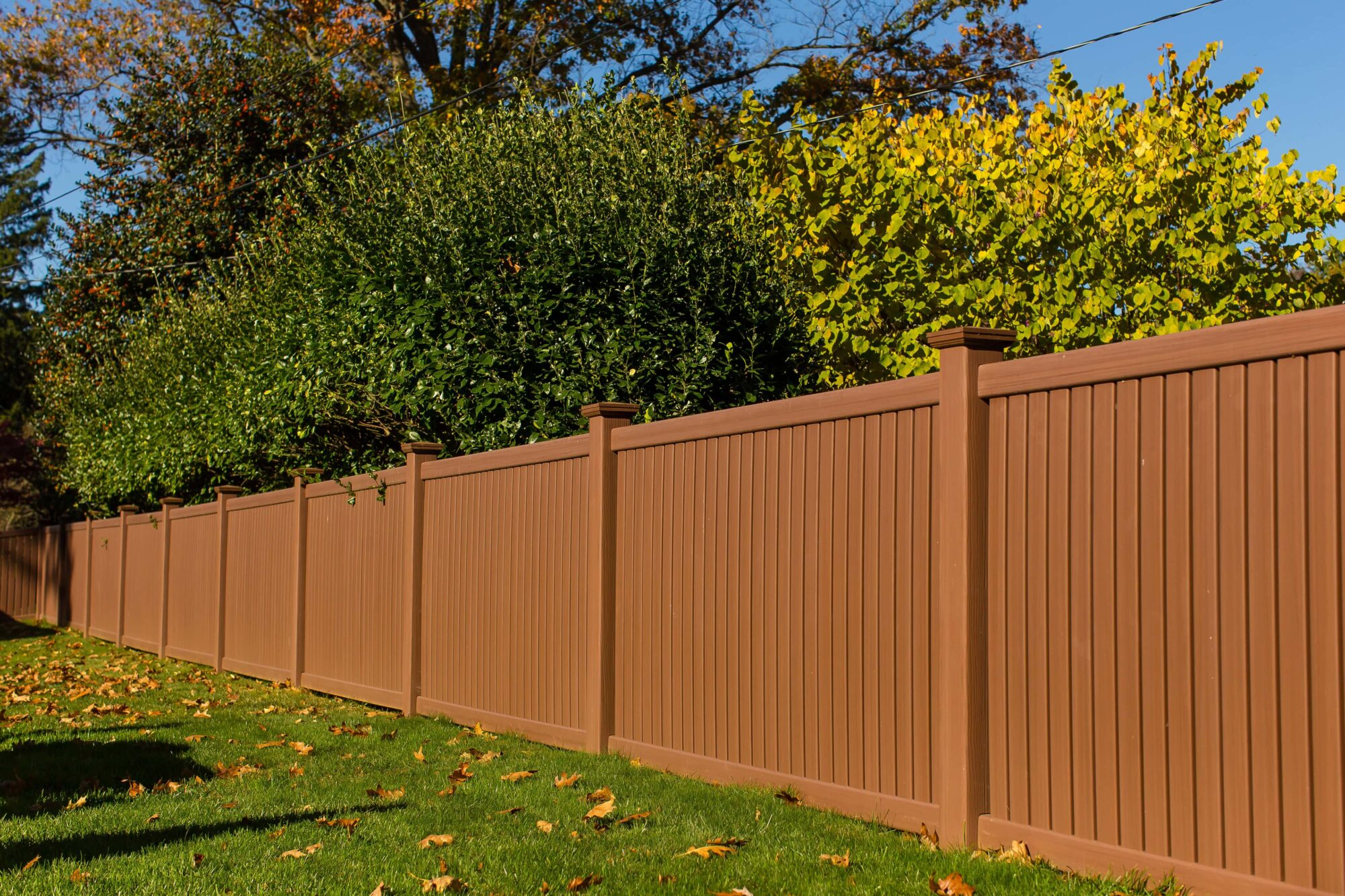
- Material and style: a specified wood privacy style, a uniform vinyl color, or ornamental fencing only. Chain link is frequently restricted where it can be seen from the street.
- Height: commonly capped at 6 feet for privacy fencing, and often lower for anything forward of the house.
- Placement: the fence starting a set distance behind the front corner of the house rather than flush with it.
- Finished side out: the smooth face toward the street and the neighbors, with posts and rails on your side.
- Open fencing on view lots: lots that back onto a pond, green space, or drainage reserve are often limited to ornamental or other open-style fencing along that line.
- Stain and color: natural wood, a specific stain color, or a specific vinyl color.
Most applications ask for the plot plan with the fence line drawn on it, plus height, material, style, color, and gate locations. A contractor who has worked in your subdivision can often tell you what the committee tends to approve, but the written approval is what protects you. Compare every material on our fence types page, and see our guides to privacy fences, vinyl fences, and wrought iron for the details on each.
Your Neighbors Are Fencing Too: Coordinate the Shared Lines

On a new-build block, the lots beside and behind you are closing within months of yours. That timing is an opportunity:
- Share the cost of shared lines. A fence between two new backyards benefits both houses. In town, a neighbor is generally not obligated to chip in, but when both households want a fence anyway, splitting the common line is common sense — and it takes a real bite out of the cost for both of you.
- Agree on the style before anyone builds. Whoever fences first sets the look of the shared line. If you are first, talk before you order. If you are second, ask before you tie in.
- Avoid the double fence. Two neighbors who each build just inside their own line end up with parallel fences a few inches apart and a strip in the middle nobody can mow or reach. One shared fence is cheaper and cleaner.
- Get permission to tie in. Attaching your fence to the end post of a neighbor’s fence means building onto their fence. Ask first, agree on who maintains what, and confirm it in a short email.
- Watch the reserves. If your lot backs onto a reserve — a strip owned by the HOA, often along an arterial street or a drainage channel — the fence or wall on it may belong to the association. Tying into it, or fencing onto the reserve, needs the HOA’s permission.
Our fence etiquette guide covers the conversation itself, what Kansas law says about building near a property line, and how to put a cost-sharing agreement in writing.
Find Your Corner Pins Before Anyone Digs
Your lot corners were marked with iron pins when the subdivision was surveyed. On a new build, those pins have survived months of excavators, concrete trucks, and landscapers — or they have not. Before you lay out a fence:
- Find every corner. A metal detector and a careful probe will turn up most pins a few inches below the surface. Dig gently; a pin you knock loose is no longer a reliable marker.
- If a pin is missing or looks disturbed, have a surveyor re-stake it. That costs far less than moving a finished fence.
- Do not trust the sod line or a landscaper’s flag. Neither one is a boundary.
- Build just inside your line unless you and the neighbor have agreed in writing to a shared fence on the line.
Derby’s fence permit application puts locating the property irons squarely on the applicant. That is a good rule to follow wherever you live.
Permits: Wichita vs. the Suburbs
This is where new-build owners get tripped up, because the rules change at the city limits — and a lot of new construction is happening just past them.
- Wichita: The combined Wichita and Sedgwick County building and trade code exempts fences not over 8 feet high from needing a building permit, and the Unified Zoning Code allows fences up to 8 feet in front, rear, and side yards. The rule that catches corner lots is visibility: a fence more than 80 percent solid is limited to 3 feet within 20 feet of where a side lot line meets the street right-of-way, and within 20 feet of a driveway intersection.
- Derby: A fence permit is required for a new or replacement fence. The application carries a $25 fee and needs a drawing showing property lines, easements, structures, and the proposed fence location, and the finished fence is inspected. Wood fences facing or visible from a public street must have the finished side facing out, or be built shadowbox-style.
- Andover: The city lists fences among the residential projects that require a permit application and a plot plan.
- Maize, Goddard, Bel Aire, Park City, Valley Center, and the rest of the metro: each city sets its own rules. Check with city hall before you order.
HOA approval is a separate step on top of any permit. Our Wichita fence permit guide has more detail, and if a pool is in your plans, note that Wichita requires a 60-inch pool barrier — our pool fence guide covers it.
Choosing the Fence for a New Build
On a new build, the HOA usually narrows the material choice before the budget does. Within what your covenants allow, here is how it tends to shake out, using planning ranges for the Wichita market:
- Wood privacy: the most common first fence on a new-build lot. Roughly $25–$40 per linear foot installed for pressure-treated pine and $30–$50 for cedar. New wood needs to dry out before it will take stain, so plan fence staining for later rather than the week it goes in.
- Vinyl: roughly $45–$70+ per linear foot for a 6-foot privacy fence. The pick when you want a uniform look and no staining, and required outright by some subdivision covenants.
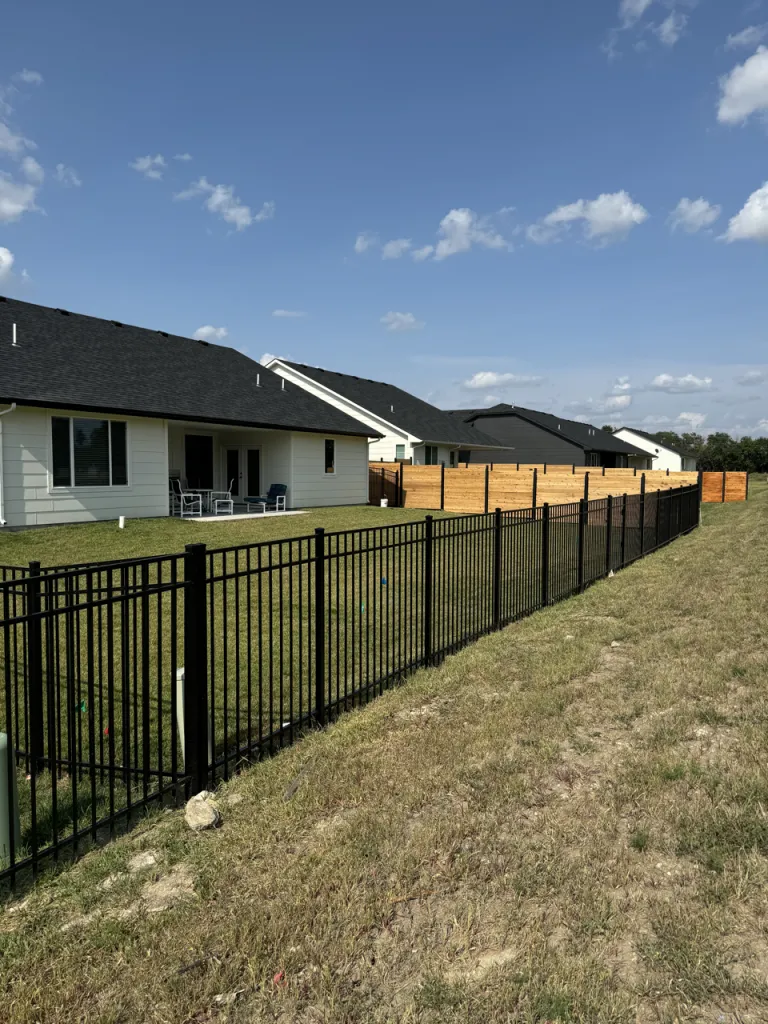
- Ornamental steel or aluminum: the usual answer on lots backing onto ponds and open space, and for pool enclosures and front yards.
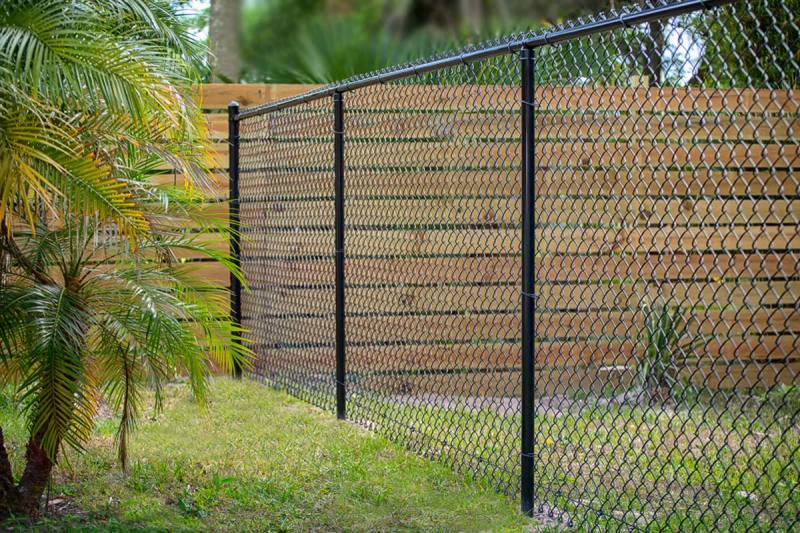
- Black vinyl-coated chain link: the budget way to keep a dog in, where the HOA allows it. Our chain link guide has the specs.
Those are budgeting ranges, not quotes — see the 2026 fence cost guide for what moves the number. Sharing a line with a neighbor is the biggest single lever most new-build owners have on the total.
Plan gates for the projects you have not started yet
A new build is usually the first of several outdoor projects — a patio, a shed, a pool, a playset. Most of them need equipment in the backyard, and a 4-foot walk gate will not let a skid steer or a pool excavator through. If there is any chance of a future pool or major landscaping, put a double drive gate on the side with the best access now — 10 to 12 feet wide covers most equipment — or plan a removable section. That costs far less than cutting a finished fence open later. See our gate installation options.
Questions to Ask a Fence Contractor About a New-Build Lot
- Will you look at my plat, plot plan, and lot grading certificate before you quote?
- How will you cross or run along the drainage swale without changing the grade?
- Where are my easements, and what happens to the fence if a utility needs access?
- Who calls 811, and how will you avoid my irrigation lines?
- How deep do the posts go, and what do you do where a post lands in trench backfill?
- Who handles the permit if my city requires one?
- What happens to the dirt from the post holes?
- What warranty covers the work? Every Midwest Fence installation comes with a 1-year warranty on workmanship and materials.
For the bigger picture on hiring, see DIY fence installation vs. hiring a pro, and for what a fence adds when you eventually sell, see does a fence increase home value.
Frequently Asked Questions About New Construction Fences in Wichita
How soon can I put up a fence after closing on a new construction home?
As soon as the builder has finished final grading and you have HOA approval, plus a city permit if your city requires one. Final grade is the real milestone: a fence built before it can end up in the way of a regraded swale or set at the wrong height. Once approvals are in hand, Kansas 811 needs two working days notice before anyone digs, and most residential fences are built in 1 to 3 days.
Should a fence go in before or after sod on a new build?
Either can work — what matters is that the grade under the fence line is final. If the sod is already down, a fence crew digs one hole per post and the lawn along the line usually recovers within a few weeks. If you are installing the lawn yourself, fencing first is easier: the crew gets clear access to the perimeter and you are not repairing brand-new turf. If a sprinkler system is still to come, fence first and run the lines inside the fence.
Can I build a fence in a drainage easement in Wichita?
Be careful. Many newer Wichita subdivisions carry a recorded covenant under the Wichita Backyard Drainage Policy stating that drainage easements must remain at established grades and stay unobstructed so stormwater can move, and requiring owners to give anyone installing fencing a copy of the Individual Lot Grading Plan and Certificate. A fence that fills, dams, or diverts a swale runs against that. Read your plat and covenant, keep the bottom of the fence off the ground where water flows, and ask the city before building inside a drainage easement. Some suburbs, such as Derby, allow easement fences only with engineering approval and removable sections.
Do I need a permit for a fence on a new build near Wichita?
Inside Wichita, generally no — the combined Wichita and Sedgwick County building and trade code exempts fences not over 8 feet high from needing a building permit. The suburbs are different. Derby requires a fence permit for new and replacement fences, with a $25 fee, a drawing showing property lines and easements, and an inspection. Andover lists fences among the projects that require a permit application and a plot plan. Maize, Goddard, and other nearby cities set their own rules, and HOA approval is a separate step on top of any permit.
Who pays for a fence between two new-construction lots?
Whoever builds it, unless the neighbors agree otherwise. In town, a neighbor is generally not obligated to share the cost of a new fence. On a new-build block where both households want a fence anyway, splitting the shared line is common sense and lowers the cost for both. Agree on style and placement before anyone orders, get permission before tying into a neighbor’s fence, and put the arrangement in a short email so it survives a future sale.
Does my HOA have to approve my fence?
If your covenants require architectural review, yes — and you want that approval in writing before materials are ordered. New-build HOAs are often still run by the developer, so the builder or developer may handle the review. Expect to submit your plot plan with the fence line drawn on it, plus height, material, style, color, and gate locations. Common requirements include the finished side facing out, a maximum height, and placement behind the front corner of the house.
Get a Free New Construction Fence Estimate in Wichita
Whether you just closed in Maize or Goddard, are waiting on final grade in Andover or Derby, or are fencing a new build on the edge of Wichita, Midwest Fence installs new construction fences in Wichita and across the metro — wood privacy, vinyl, ornamental, and chain link, with gates sized for the projects you have planned. We are glad to work around your builder’s schedule and your subdivision’s requirements. We are locally owned and operated, licensed and insured, financing with monthly payment options is available, and every installation is backed by a 1-year warranty on workmanship and materials.
Request your free written estimate or call us at (316) 710-5824. Have your plat, plot plan, lot grading certificate, and HOA guidelines handy, and we will walk the line with you, flag the swales, easements, and utility boxes, and put the height, material, gates, and price in writing. See how our fence installation process works and browse finished projects in the gallery. We serve Wichita, Maize, Goddard, Andover, Derby, Mulvane, and more — see every community on our service areas page.